The de Young and the Legion of Honor: San Francisco’s Twin Pillars of Art
On my recent trip to San Francisco, I found myself once again drawn to my two favorite museums — the de Young in Golden Gate Park and the Legion of Honor overlooking the Pacific Ocean.
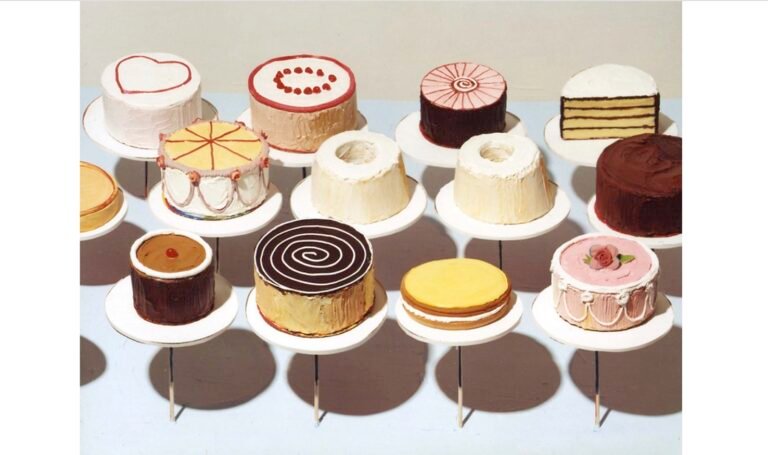
I’ve visited them many times over the years, but each return feels new, shaped by memory, architecture, and the art that fills their halls. This time, I went to see Matisse at the de Young and Wayne Thiebaud at the Legion. Having once met Thiebaud in person, my visit was also a quiet homage — a way to honor the joy and intimacy his work brought to my own journey as an artist.
These museums are more than just buildings filled with art. Together, they embody the Fine Arts Museums of San Francisco (FAMSF), forming one of the largest public art institutions in the United States.
They are often described as “sister museums,” and like sisters, they complement and balance each other: one bold and contemporary, the other classical and contemplative.
A Tale of Two Histories
de Young
The de Young began humbly in 1895 as part of the California Midwinter International Exposition. Named after newspaperman M. H. de Young, it started in Egyptian Revival style, survived the 1906 earthquake, expanded, and eventually grew into a beloved art hub.
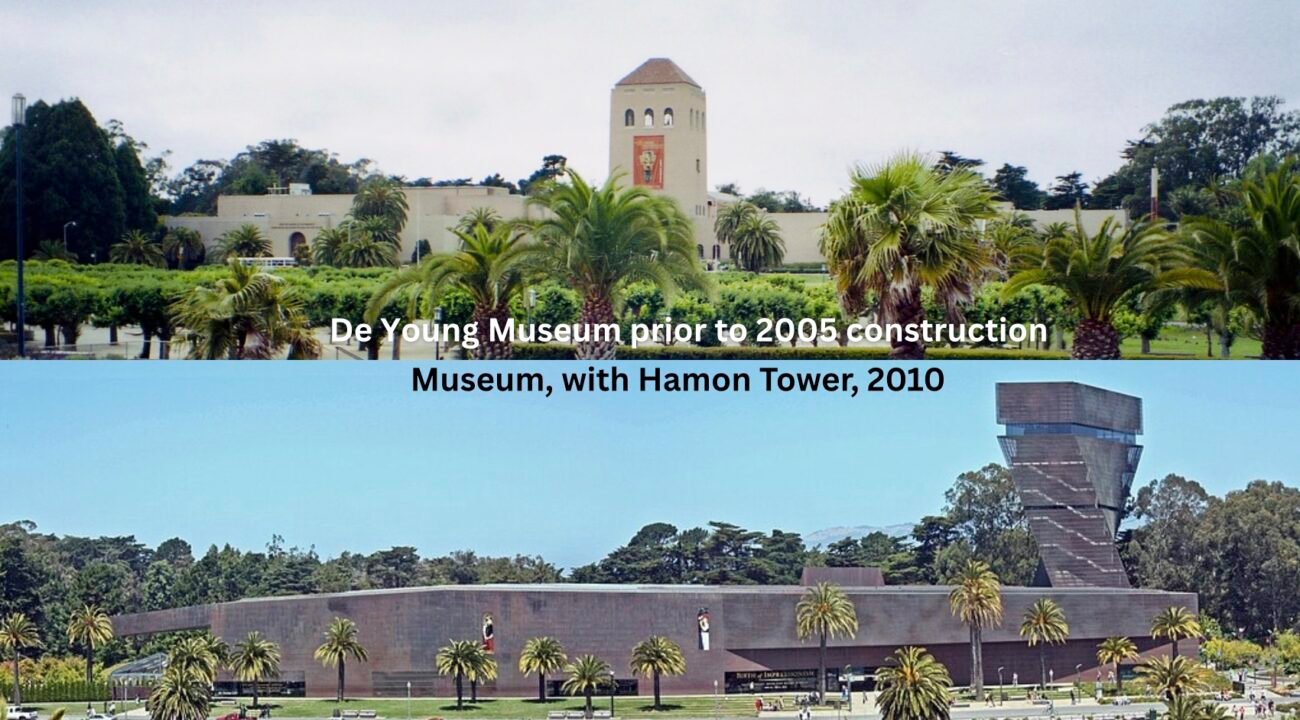
Above: Bob Linsdell, De Young Museum prior to 2005 reconstruction, via Wikimedia Commons
Below: WolfmanSF, The de Young Museum, Golden Gate Park, SF, via Wikimedia Commons
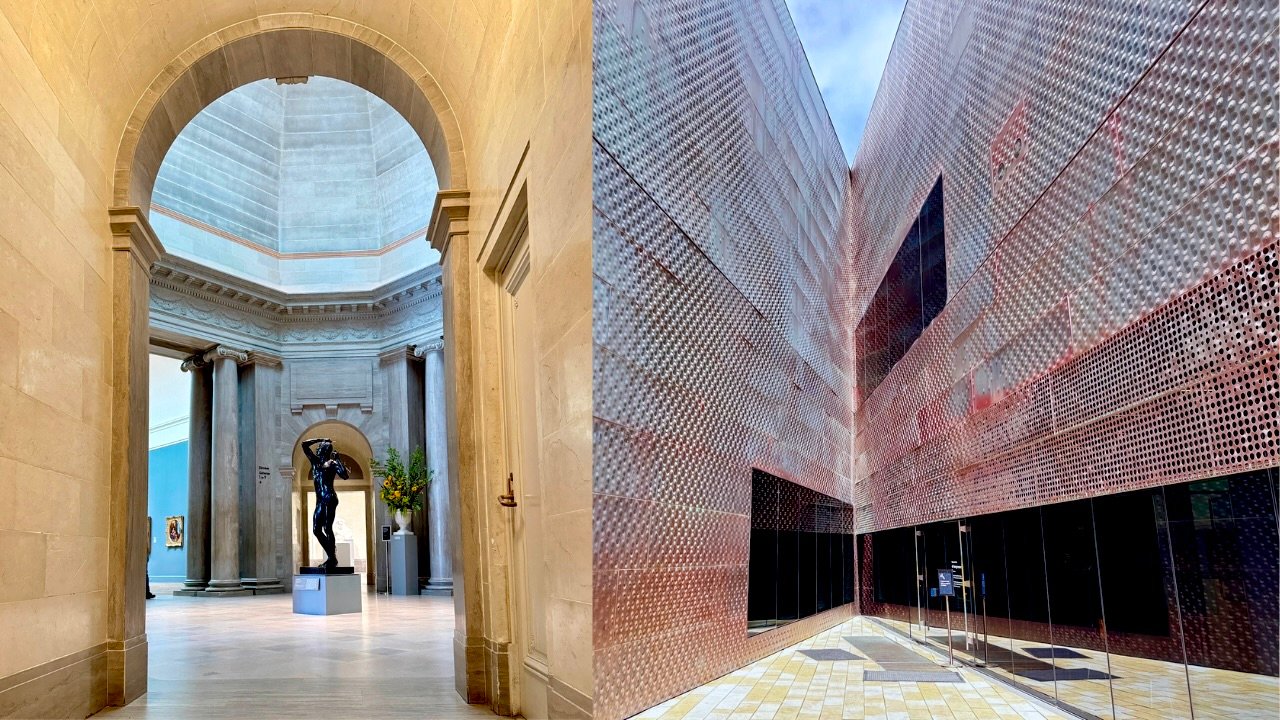
But after the 1989 Loma Prieta earthquake, the building was too damaged to save. Out of that crisis came a rebirth. In 2005, the Swiss architects Herzog & de Meuron unveiled a new building. Copper-clad, textured, and crowned by the Hamon Tower, it became a modern landmark of San Francisco.
Legion of Honor
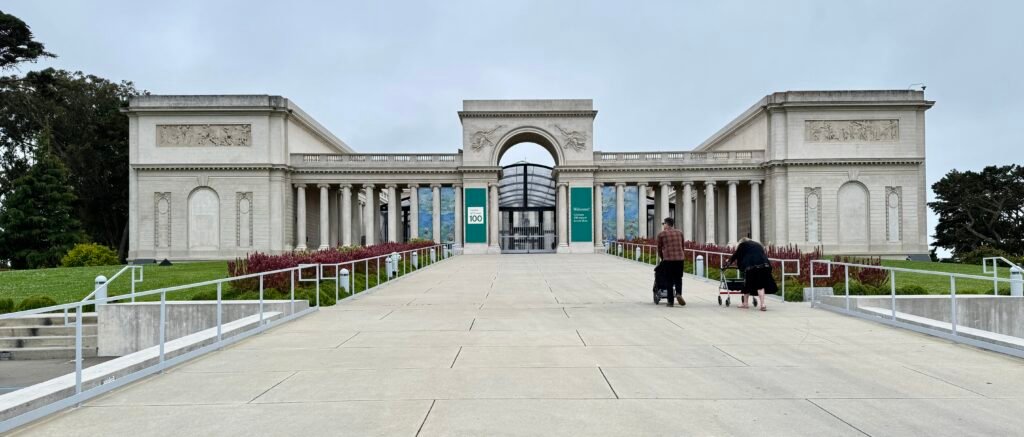
The Legion of Honor has a very different story. It was founded by Alma and Adolph Spreckels.
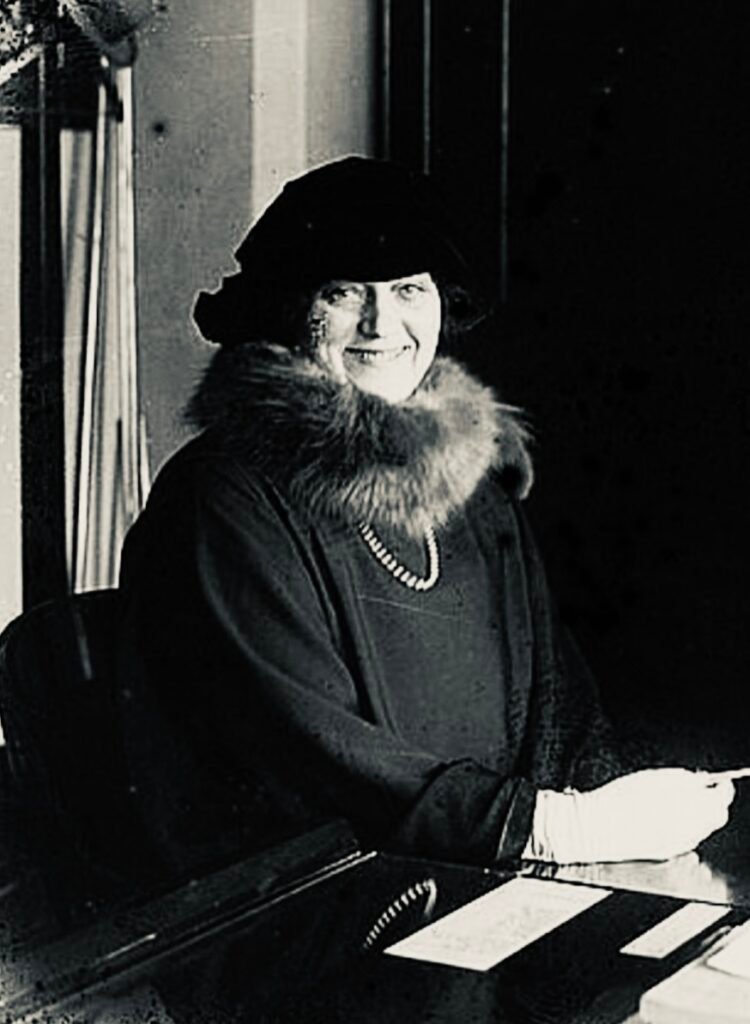
Alma in 10-2-1922
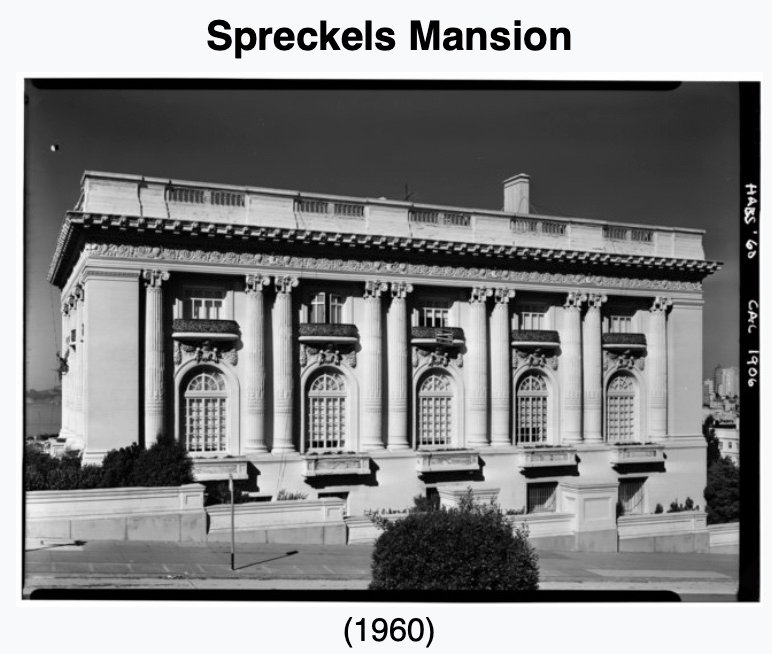
It was a gift from Alma de Bretteville Spreckels to San Francisco in 1924, the museum was built as a memorial to California’s soldiers who died in World War I. Alma, captivated by the Palais de la Légion d’Honneur during her travels to France, commissioned an elegant replica for her city.
Exploring Each Museum’s Unique Spirit
The de Young: Innovation in the Park
I still remember the first time I laid eyes on that copper “skin,” glinting mysteriously against the lush greenery of Golden Gate Park—so striking and enigmatic, like nothing else in San Francisco.
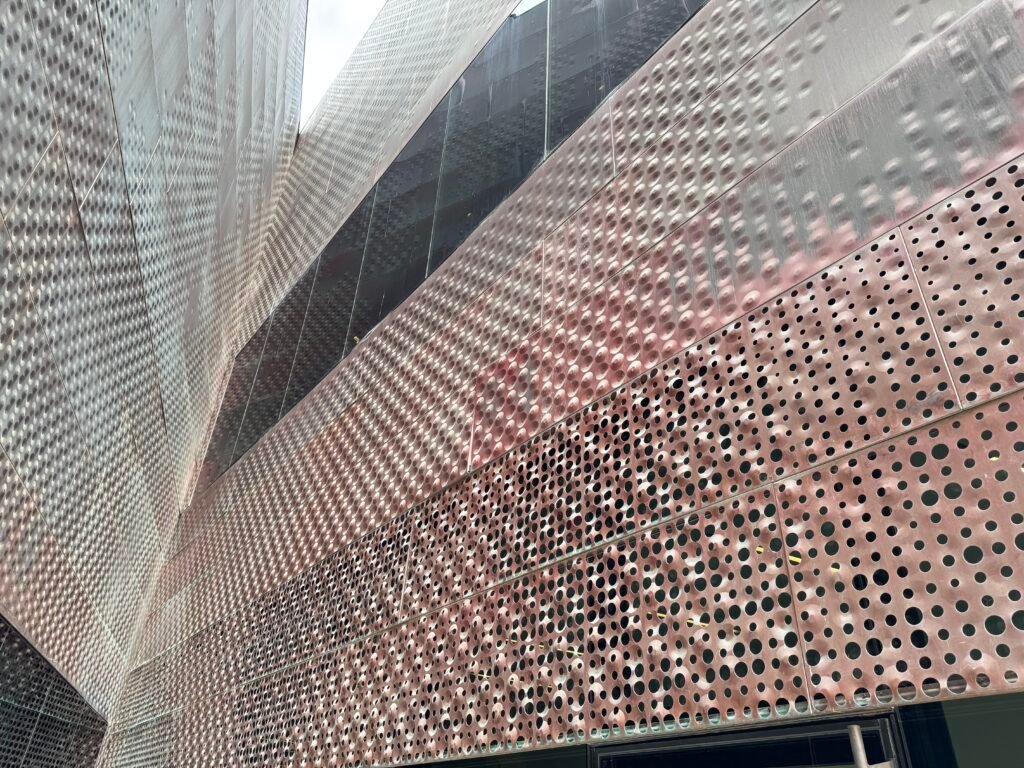
My curiosity about its design led me to the story behind it: Herzog & de Meuron, the visionary architects, drew inspiration from the play of filtered sunlight beneath the park’s tree canopy.
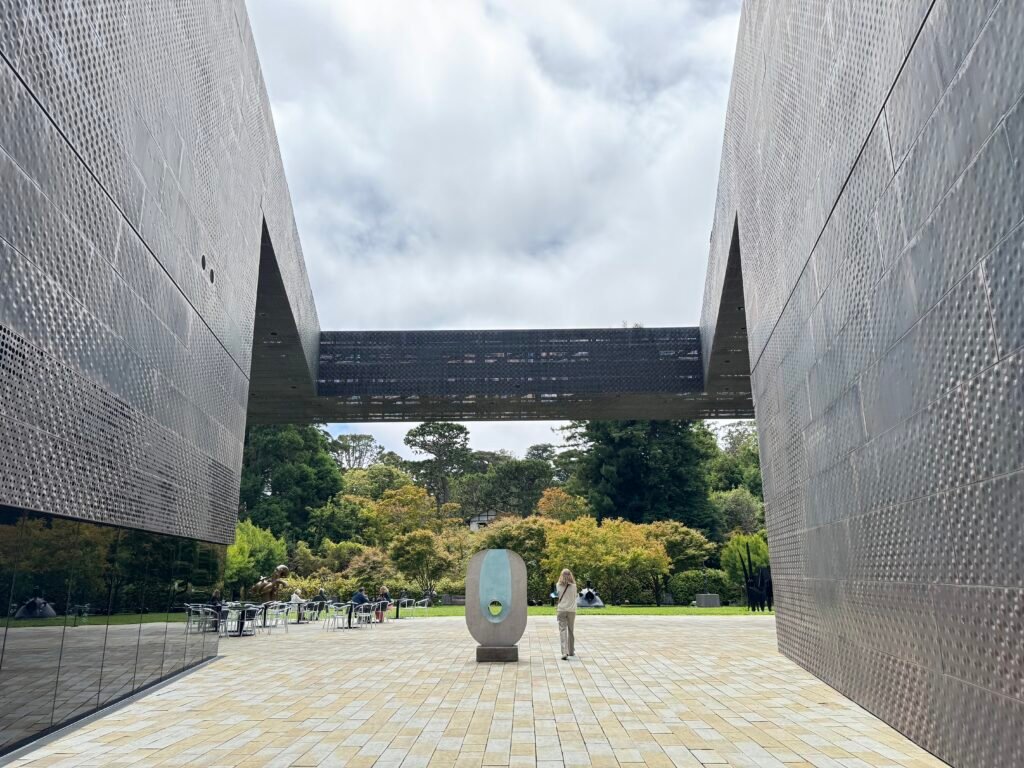
They chose copper—a living, natural material that would oxidize and transform over time—to create a facade with perforations and subtle textures.
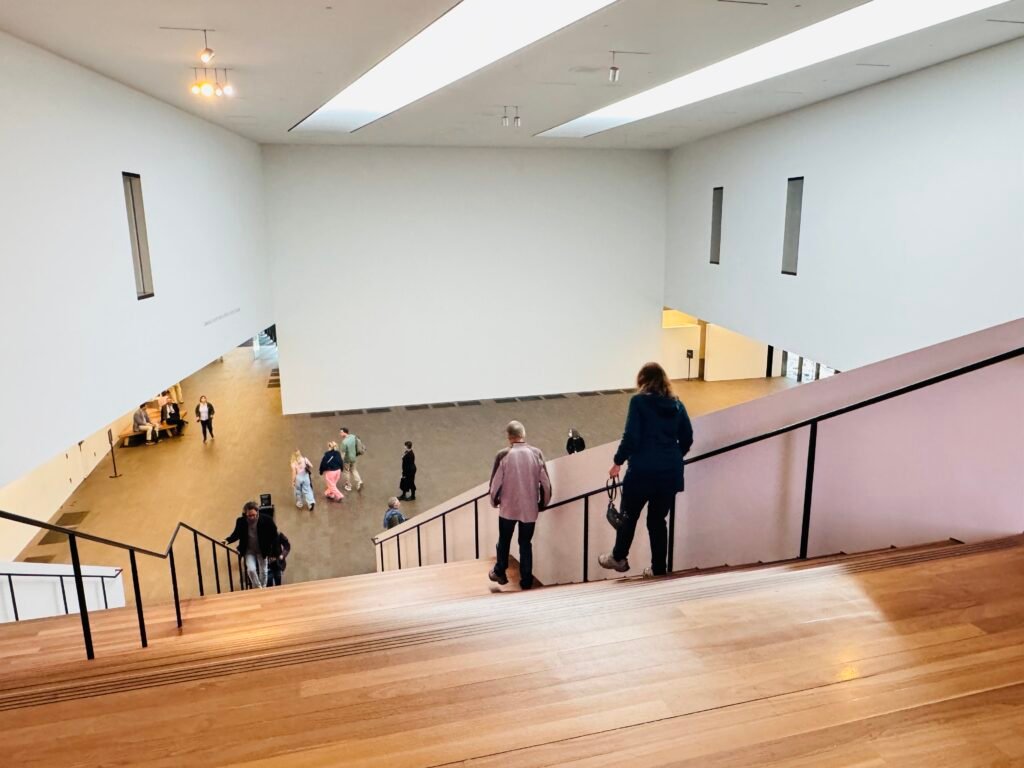
Inside, the galleries open into vast contemporary spaces, filled with natural light streaming through large windows that blur the line between museum and landscape.
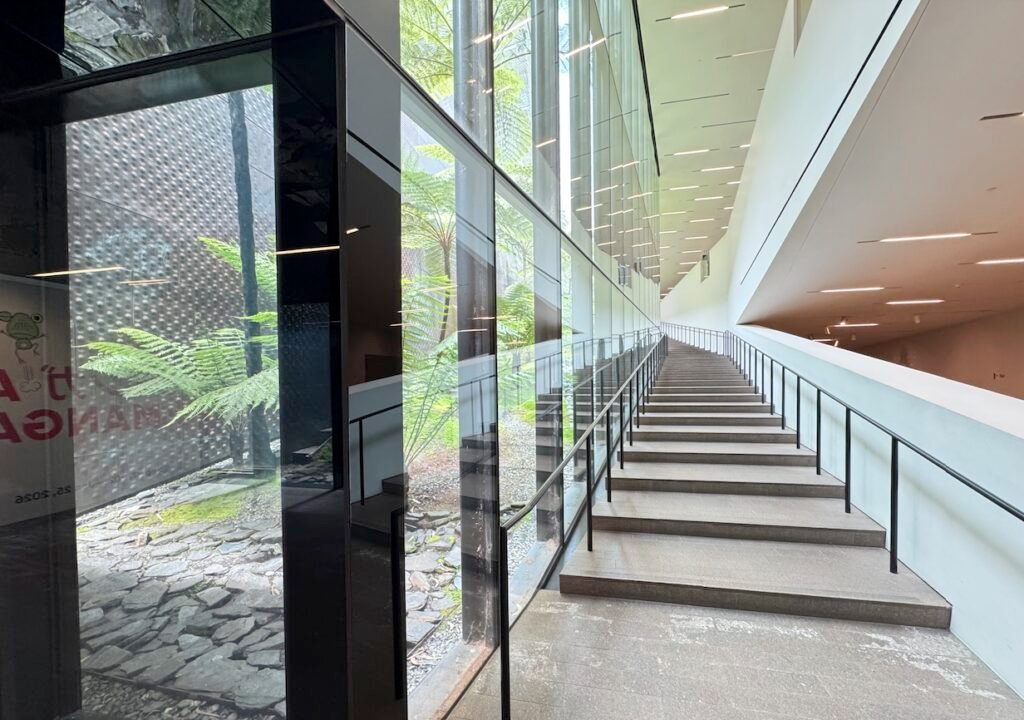
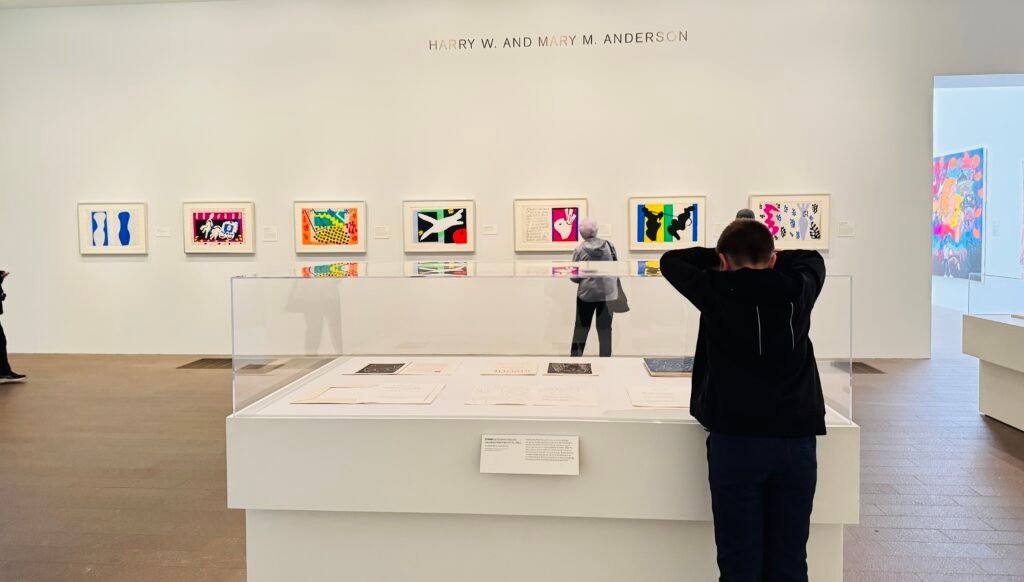
The collection highlights American art from the 17th century to today, but it includes powerful works from Africa, Oceania, and the Americas, and one of the nation’s finest textile and costume collections. The exhibitions often feature bold contemporary voices, and something unexpected and boundary pushing (e.g., Isaac Julien or Japanese manga).
One of the most unique features will be the Hamon Observation Tower — free to all. From the top, you see Golden Gate Park stretching below, the city skyline, and the Pacific Ocean at the horizon.
Step outside and the experience continues. Strolling along the path of the Osher Sculpture Garden is a quiet retreat.. Even at the café terrace while sipping a coffee, sculptures surround you .
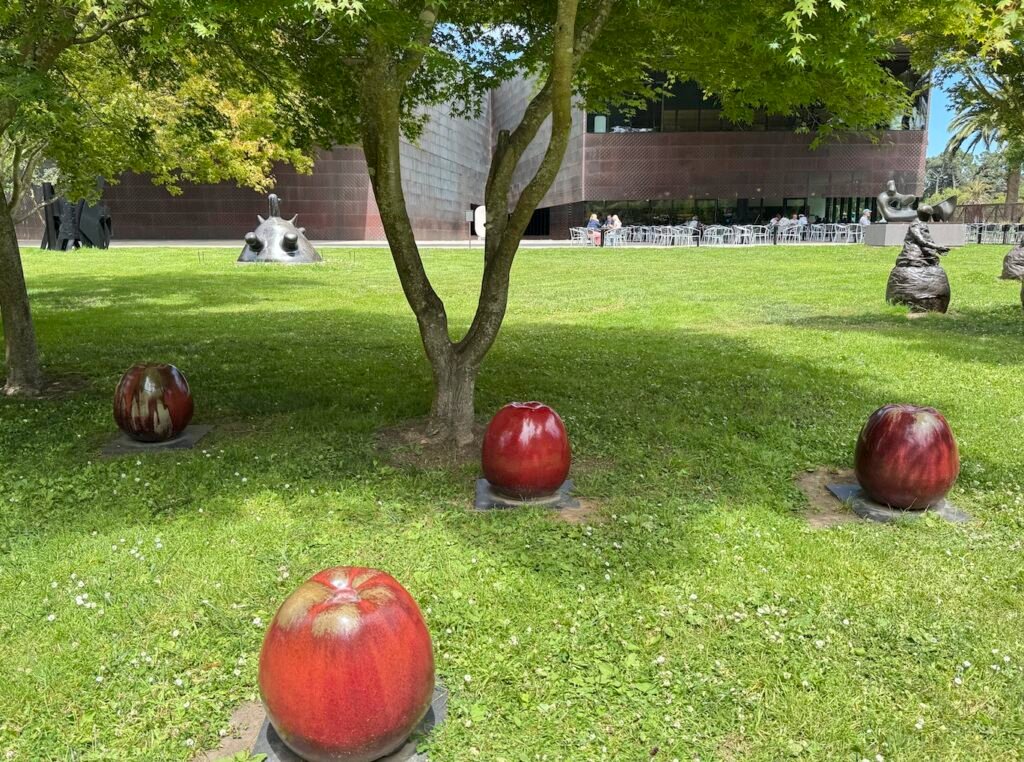
Ocher Sculpture Garden
The Legion of Honor: A French Palace on the Pacific
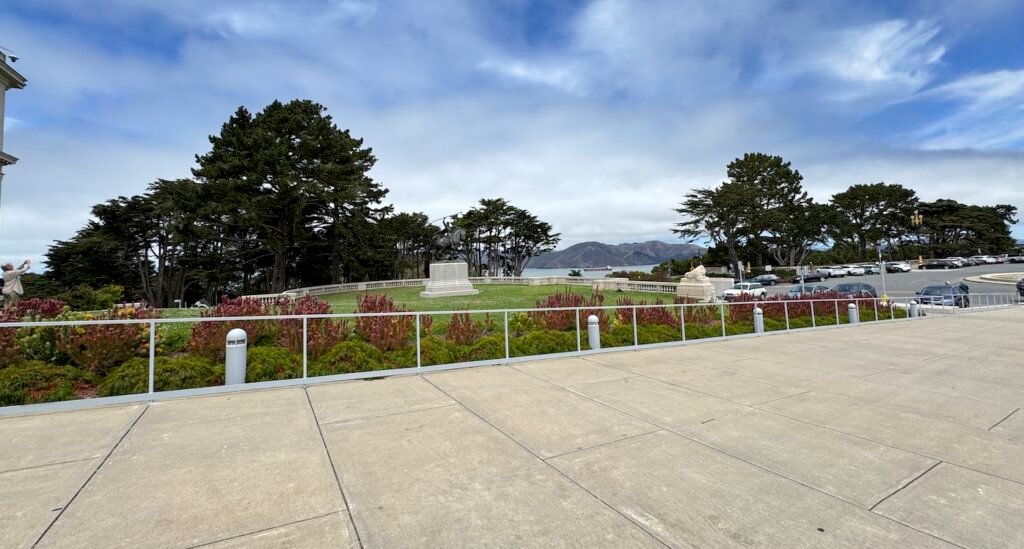
Even before you even step inside, the Legion of Honor will take your breath away. Its gleaming neoclassical architecture perched dramatically above the Pacific—overlooks the Golden Gate Bridge and offers sweeping views of San Francisco’s skyline. It truly feels like a slice of Paris on the California coast.
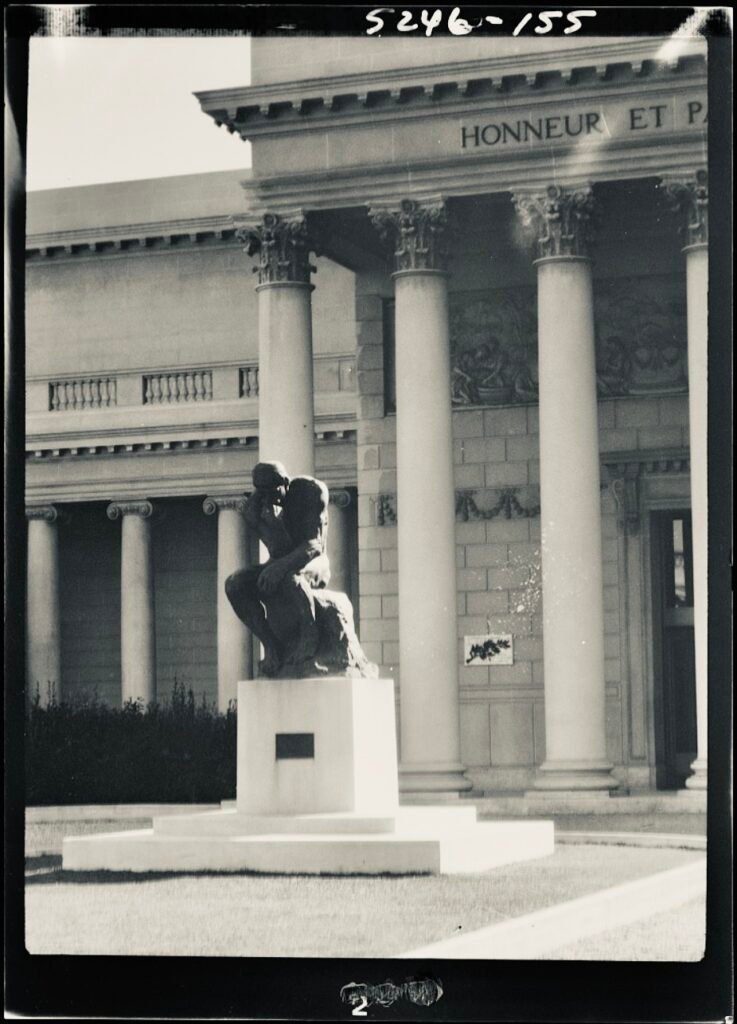
Stepping into the Legion’s majestic courtyard, you’re greeted by neoclassical columns and Rodin’s iconic The Thinker, all set against a panorama that includes the distant Golden Gate Bridge.
I had often wondered why the Legion places such emphasis on Rodin’s sculptures. The answer, I discovered, lies with Alma herself: on her Parisian journeys, she met Auguste Rodin and was so moved by his work that she acquired many of his pieces, bringing them back to San Francisco.
No wonder the Legion boasts one of the world’s finest Rodin collections outside Paris!
Rodin, The Thinker, 1904, California Palace of the Legion of Honor, Arnold Genthe, 1927
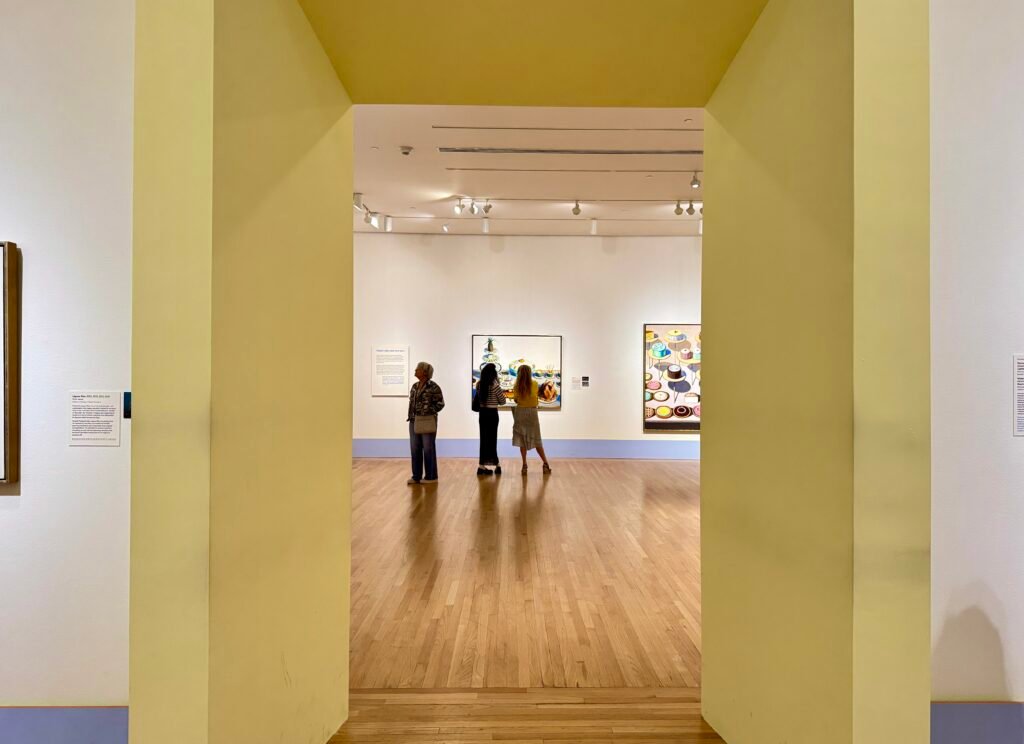
But the Legion is far more than a home for European masterpieces. Yes, you’ll find Renaissance paintings, Baroque splendor, and Impressionist icons — including Monet’s Water Lilies and Picasso’s The Orator — yet the museum also embraces modern and contemporary voices.
Installations by living artists and bold, thought-provoking exhibitions bring dialogue into its classical halls. Even outdoors, works like George Segal’s Holocaust Memorial create moments of reflection in the open air.
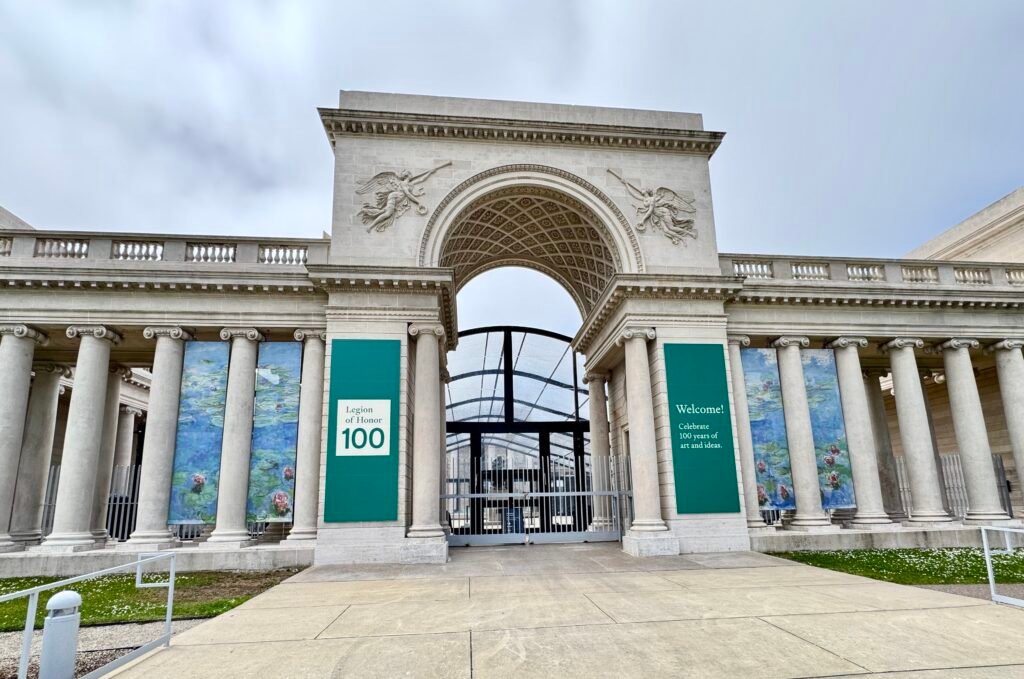
The Legion of Honor Museum is celebrating its 100th anniversary. It is hosting a major exhibition titled “Celebrating 100 Years of the Legion of Honor” until November 2, 2025.
And for film buffs, here’s a fun piece of trivia—Alfred Hitchcock chose the Legion for one of the most memorable scenes in Vertigo, where Madeleine is transfixed by a mysterious portrait.
For music lovers, the Legion’s magnificent pipe organ given by John D. Spreckels in honor of his brother Adolph fills its galleries during free Saturday afternoon concerts.
And did you know? Beneath the museum’s foundation lies San Francisco’s forgotten City Cemetery, with thousands still at rest beneath your feet—an echo of the city’s layered past.
For me, the Legion of Honor is where Europe’s timeless legacy meets California’s creative spirit—a place deeply rooted in heritage yet always ready to embrace the new.
Two Philosophies, One Mission
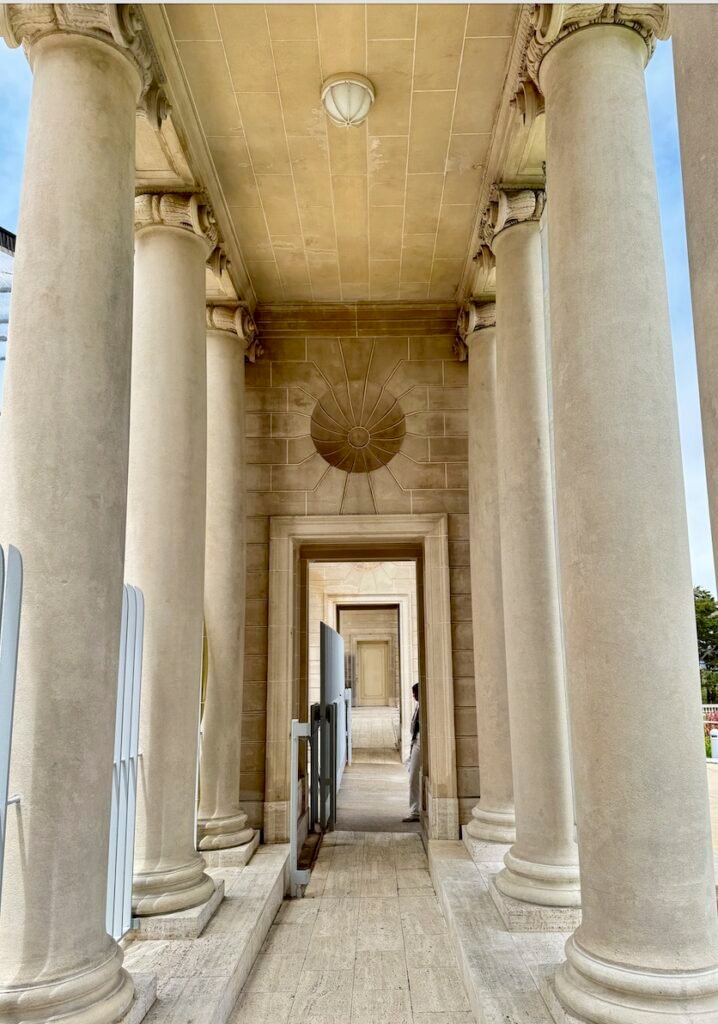
Though their characters differ, their mission under FAMSF is shared: to connect people with art across time, geography, and culture.
- At the de Young, the emphasis is on American art (17th century to now), non-Western collections (Africa, Oceania, the Americas), and textiles and costume arts — one of the most significant holdings in the country. It reflects San Francisco’s identity as a crossroads of cultures and ideas.
- At the Legion of Honor, the focus is on European traditions and ancient art, grounding visitors in the lineage of Western art history while also engaging with living artists through thoughtful exhibitions.
Together, they form a dialogue: one grounded in heritage, the other open to experimentation — tradition and modernity in constant conversation.
Engaging the Public
What makes both the de Young and the Legion of Honor truly remarkable isn’t just what’s displayed on their walls—but how they actively invite the public into the worlds of art-making and discovery:
- Educational Programs: They offer guided and school tours, teacher resources, kids + families workshops, and lecture series tailored to all ages.
- de Youngsters Day Out: This beloved annual event brings Bay Area families together for a full day of hands-on art-making, live performances, and creative activations. Thanks to community partners—and local artists like Wendy MacNaughton—it’s where curiosity runs wild both inside and outside the museum. It’s free and joyous, and proceeds support arts equity in schools.
- Friday Nights at the de Young: A vibrant after-hours experience with live music, dance, artist talks, film screenings, panel discussions, and pop-up workshops. It transforms the museum into a lively, social space of art and ideas.
- Accessibility Initiatives: General admission is complimentary for visitors with disabilities—and includes a guest. The Access Membership program offers discounted membership for individuals with disabilities, along with companion access, member previews, store discounts, and more.
- Beyond physical access, these museums continue expanding digital outreach through virtual tours, podcasts, and multilingual resources to engage global audiences. A 2025 expansion of their exhibition program and late-night activations reflects this inclusive vision.
*Programs do evolve and change over time, and it will be wise to check the museum’s site for updates.
Supporting Artists Today
Beyond engaging the public, FAMSF has long made efforts to support living artists and cultivate future museum leaders. It’s worth noting that no program is permanent — initiatives may shift, pause, or evolve over time — so visitors should always check the museum’s website for the most up-to-date information.
- de Young Artist-in-Residence Program: In the past, the de Young hosted monthly residencies where Bay Area artists worked in a public studio, inviting visitors to watch, ask questions, and sometimes participate. While this exact format is not currently ongoing, the museum continues to collaborate with artists through fellowships, site-specific commissions, and community-based projects.
- Fellowships and Emerging Professional Programs: FAMSF also supports the next generation of museum professionals through internships like Joseph F. McCrindle Cuand fellowships, offering mentorship and hands-on experience.
- Artist Collaborations and Commissions: Contemporary artists are frequently invited to create new works tied to exhibitions, often engaging with themes that connect past and present.
- Artist Fellows Program: This initiative includes culturally diverse artists across media—visual arts, performance, literary, and more—in the museum’s programming. Fellows present works-in-progress, curate parts of the “Friday Nights” series, and enrich the museum’s creative ecosystem.
- The Sarah K. Delson Arts Fellowship Program launched in 2024, designed to support Bay Area artists whose practice has been significantly impacted by a life-changing illness. This fellowship provides stipends and potential opportunities for engagement with the public, but it’s different from the original “Artist Fellows” program in its scope and focus.
- The Curatorial Cataloguing Fellowship program or Joseph F.McCrindle Curatorial Internship supports the museums’ strategic goal to enhance information about the collections and make it digitally accessible.
- The de Young Museum Exhibition Fellowship, a yearlong program, involves working alongside a curator on exhibitions and public programs.
- Broader Support:
- The museums commission contemporary works tied to major exhibitions and integrate Bay Area perspectives with international voices.
- They offer fellowships and internships to nurture emerging museum professionals, especially from underrepresented backgrounds and BIPOC communities. FAMSF’s IDEA committee has helped drive this equity-focused shift since 2021.
- Through donor partnerships and fundraising events like the renowned “Bouquets to Art,” they fund conservation, exhibitions, and educational programs. The Auxiliary’s Bouquets to Art has donated millions since 1941.
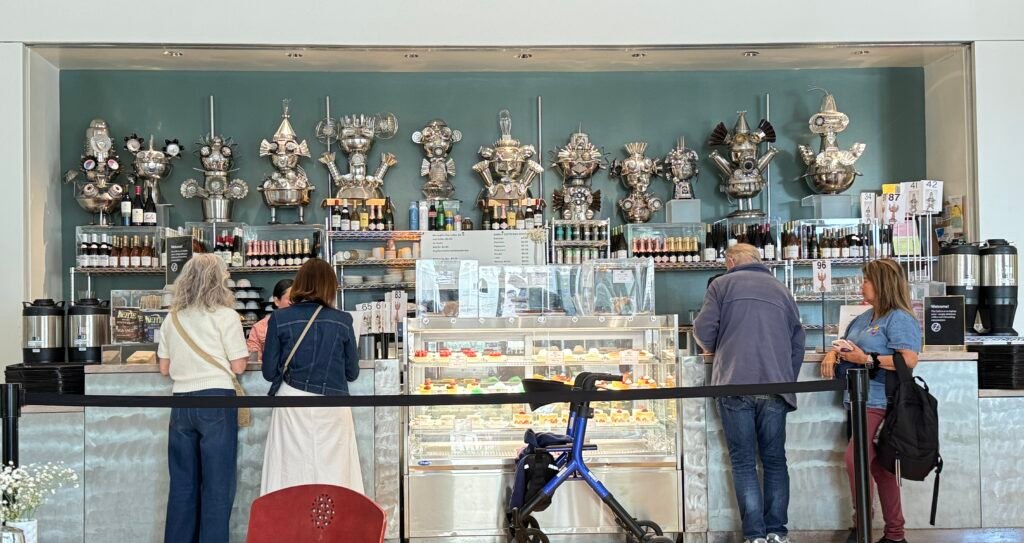
Legion of Honor Café
Why They Belong Together
In 1972, the de Young and the Legion officially merged under the Fine Arts Museums of San Francisco. The idea was simple but powerful: by joining forces, each museum could specialize, strengthen its collections, and serve the city better.
Since then, they’ve grown into twin pillars of art in the Bay Area. To walk through them is to experience two sides of one identity:
- At the de Young, a celebration of diversity, innovation, and global dialogue.
- At the Legion, a reminder of history, tradition, and timeless beauty.
Together, they tell the story of a city that honors its roots while embracing change — a city that sees art as both inheritance and experiment.
My Reflections
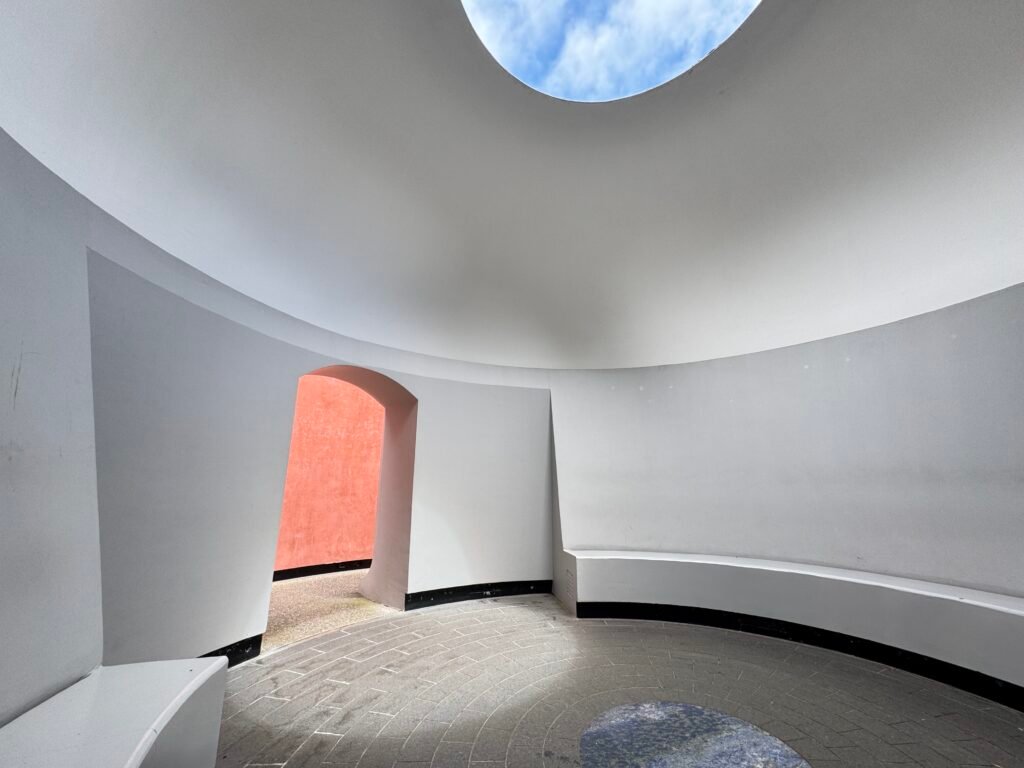
James Turrell, Skyspace-Three Gems, 2005
When I think of the de Young, I picture sunlight filtering through its copper skin, bold exhibitions like Frida Kahlo and Ruth Asawa, and the thrill of seeing contemporary art in dialogue with ancient traditions.
When I think of the Legion of Honor, I see Alma Spreckels’ vision brought to life, Rodin’s brooding Thinker guarding the courtyard, and the Pacific winds sweeping through the colonnade as the Golden Gate glimmers in the distance.
San Franciscans are truly fortunate to have not just one, but two such extraordinary museums. These institutions offer more than exhibitions — they provide endless opportunities for learning, creativity, and connection. Together, they enrich daily life and stand as cornerstones of the city’s cultural landscape.