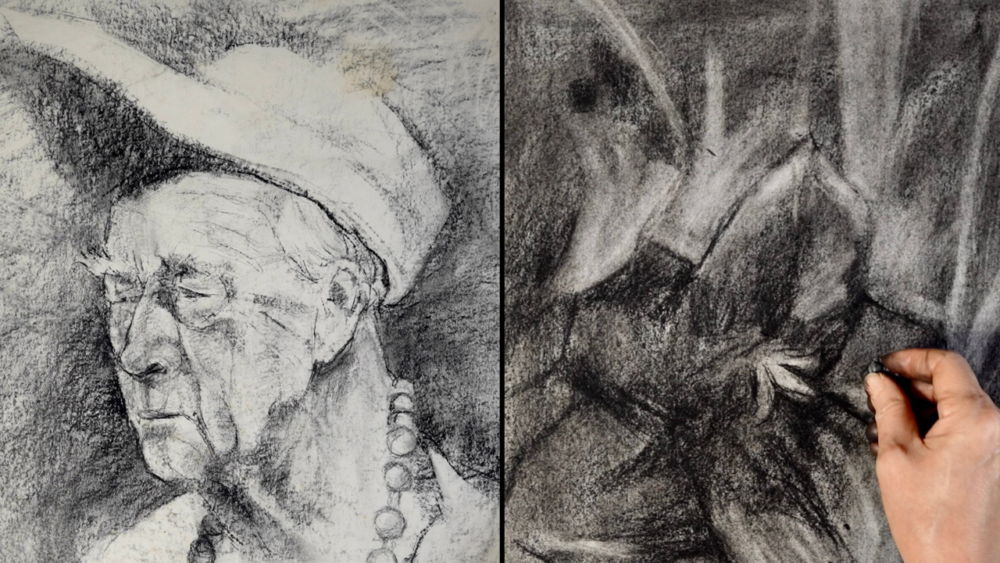
Conté vs. Compressed Charcoal: Precision vs. Expression
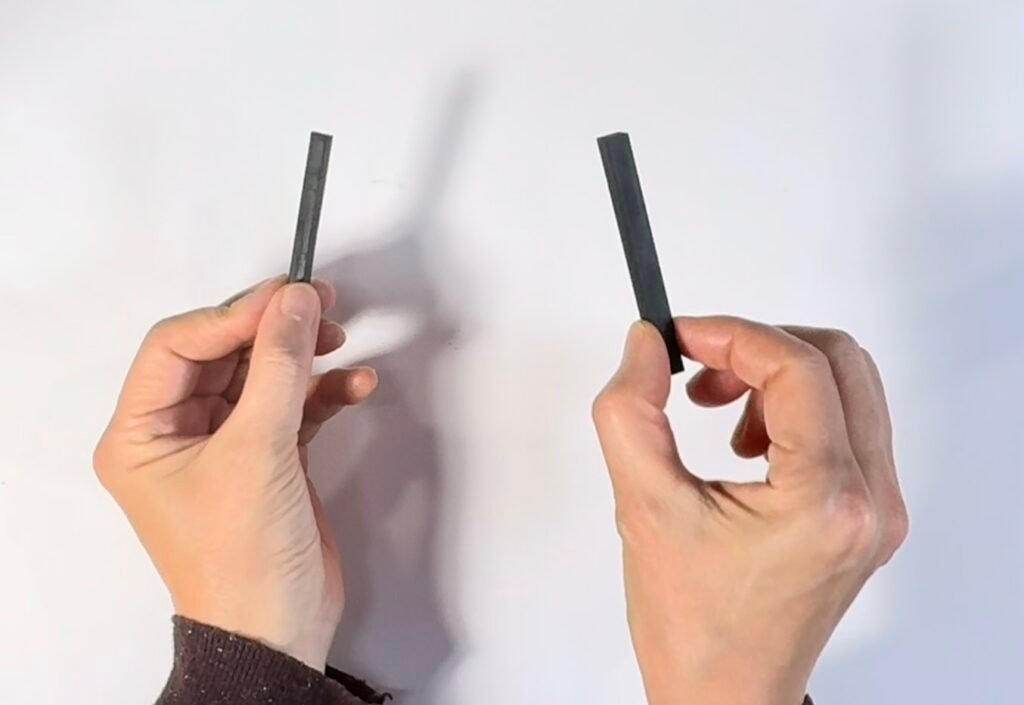
With the wide range of drawing mediums available today, it is easy to feel overwhelmed. Many materials may appear similar at first glance, yet their behavior on paper can differ dramatically due to variations in composition, binder, hardness, and surface interaction.
Each medium has its own strengths and limitations, and understanding those differences helps you choose tools that actually support the way you like to draw.
My goal is to help you understand those differences so you can choose tools that genuinely support your artistic intentions rather than work against them.
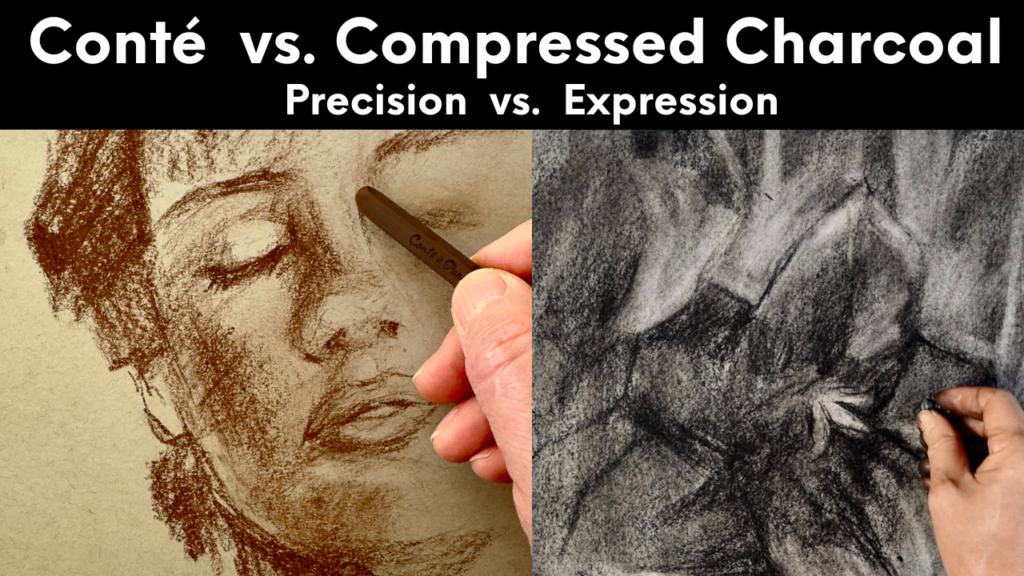
This post looks at Conté and compressed charcoal through the lens of Precision vs. Expression: when to reach for each, what they are made of, and what kinds of techniques they naturally support.
If you are new to charcoal in general, I recommend first reviewing my earlier post, Introduction to Charcoal Drawing, where I discuss vine and willow charcoal. Understanding how traditional charcoal behaves will make the distinctions in this comparison much clearer.
Material Composition & Physical Behavior
Conté (Conté Crayon): The Precision Stick
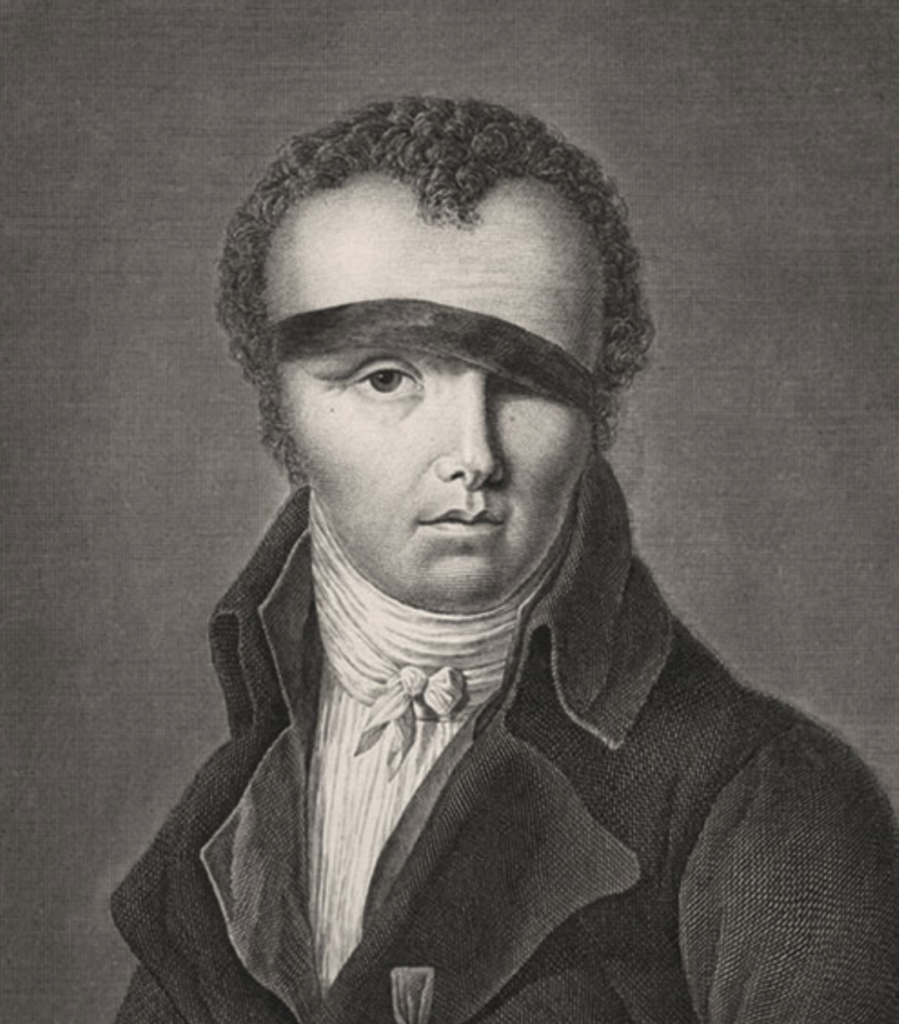
Conté crayon was invented in the late 18th century by Nicolas‑Jacques Conté during a period of wartime material shortages.
Composition and Drawing Characteristics
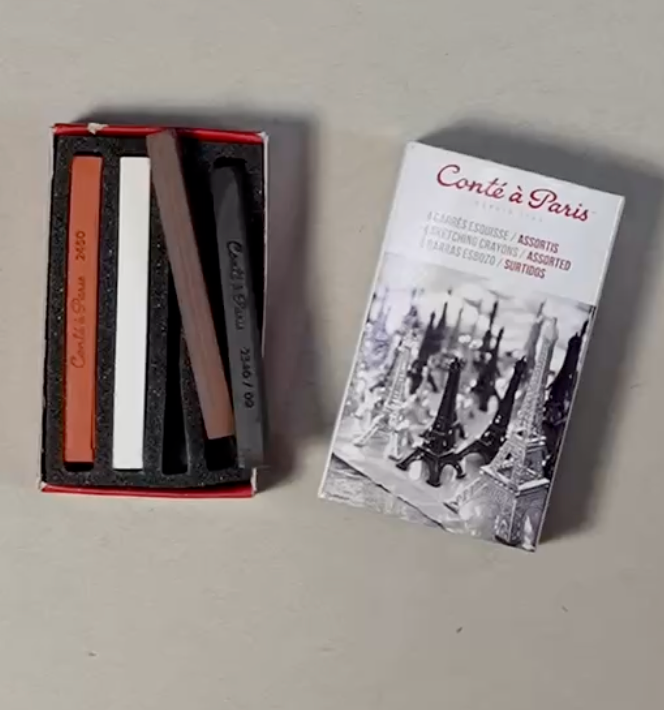
Conté is typically made from a mixture of:
- Pigment (often iron oxides or carbon black)
- Clay and a binding agent
The mixture is heat-pressed into firm square sticks.
Its formulation created a durable drawing stick that sits somewhere between charcoal and graphite in hardness.
Compared with charcoal, Conté is significantly harder and more resistant. It produces a dry, matte mark that remains dull and non-reflective—unlike graphite, which often appears shiny under light.
Because of its firmness, Conté can maintain a sharp edge and be shaped to a fine point, making it well suited for controlled line work and structured drawing.
In behavior, it is closer to hard pastels (such as NuPastel) than to traditional charcoal.
How Conté Behaves on the Surface
When used on paper, Conté offers a distinct drawing experience.
It holds a sharp edge well and produces clean, controlled lines. The marks are moderately opaque and remain stable on the surface rather than smudging easily.
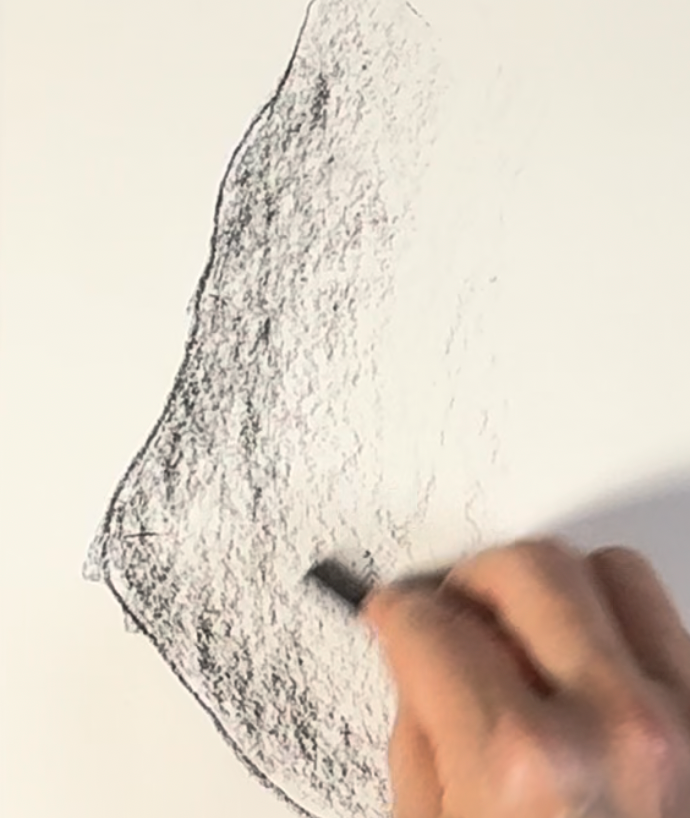
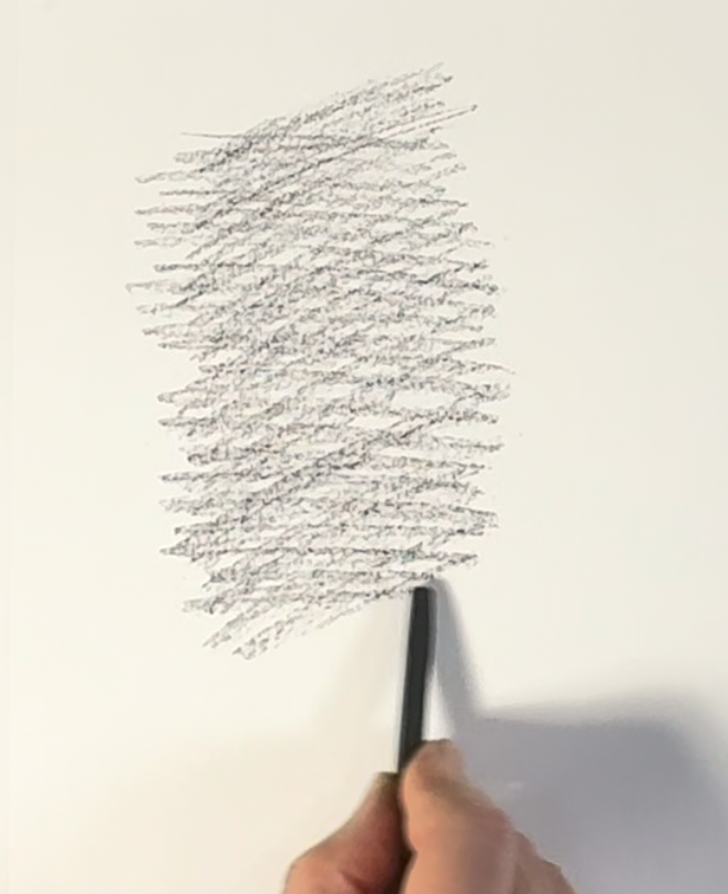
When the stick is turned on its side, it can also create broader passages of tone while still maintaining a relatively crisp character.
The material provides noticeable resistance as it moves across the paper, which many artists find helpful for maintaining control and deliberate mark placement.
Conté works on smooth paper, but it generally performs best on slightly toothy or rough papers that can grip the pigment instead of letting it slide across the surface.
Because it sits firmly on the surface and produces relatively little dust, Conté is also commonly used for underdrawing on primed canvas or toned grounds.
Techniques Where Conté Excels
These characteristics make Conté especially effective for certain types of drawing:
Plane articulation
Clearly describing planes of the head, figure, or objects by separating light and shadow with firm edges.
Structural drawing
Establishing construction lines and block-ins for heads, figures, and perspective studies.
Controlled hatching and cross-hatching
Building form through deliberate strokes that maintain clarity without excessive smudging.
Refined contour drawing
Creating clean, confident outlines and structural edges.
Modeling on toned paper
Especially effective when combined with white highlights to develop value relationships.
Underdrawing on primed canvas
Useful as a stable guide before painting.
Because Conté maintains a crisp edge, it naturally encourages measured observation and disciplined mark-making.
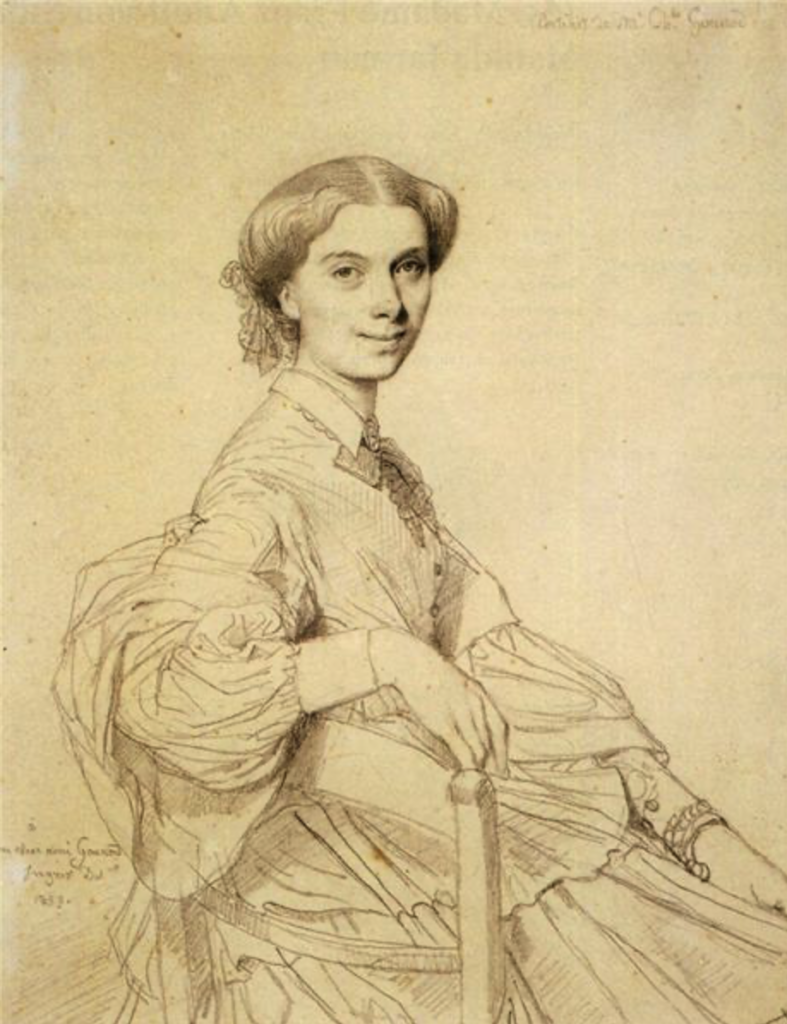
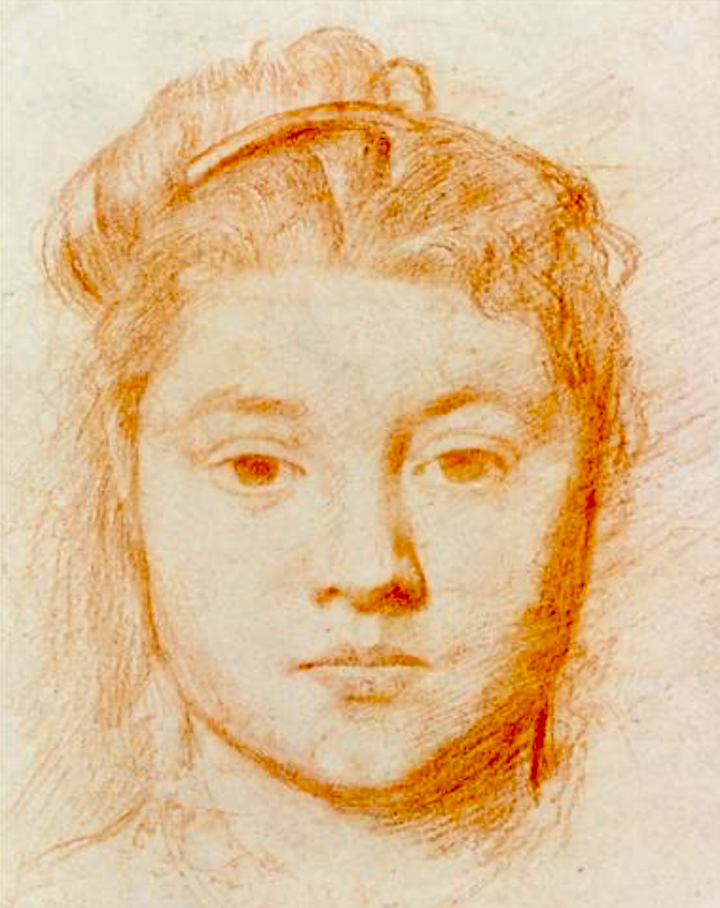
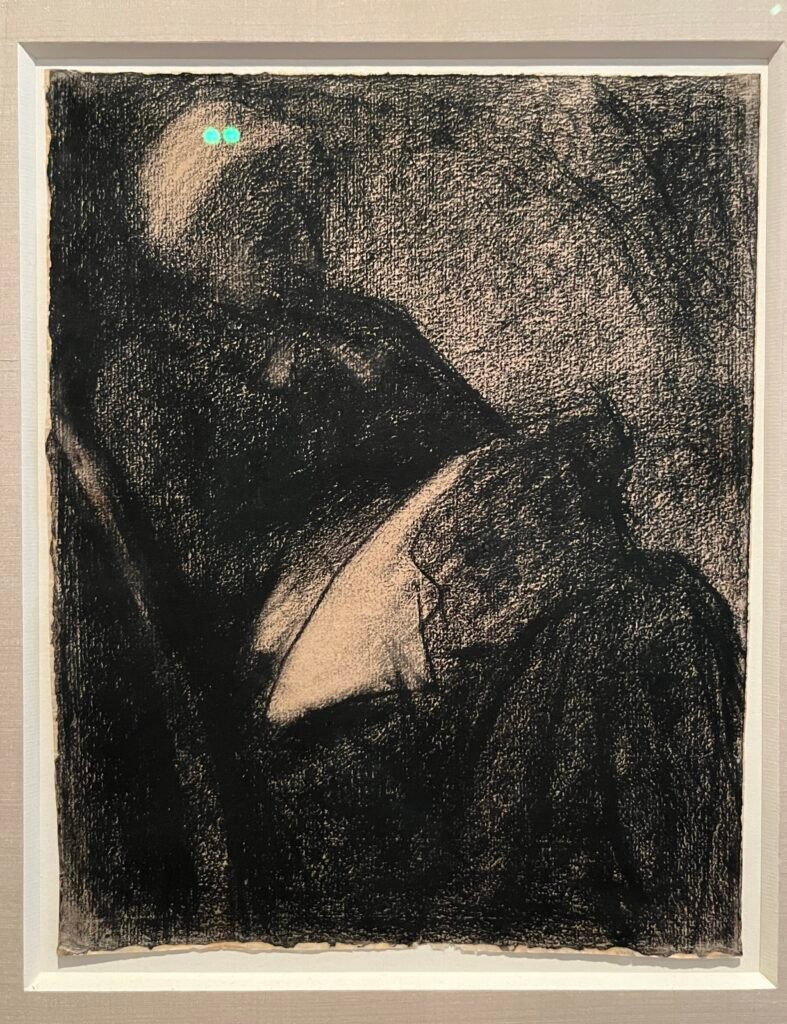
Artists such as Jean‑Auguste‑Dominique Ingres and Edgar Degas used Conté to articulate planes and refine contours in heads and figures. However, it can also be used more expressively—for example, in block-ins and atmospheric tonal passages, as seen in Georges Seurat’s drawings.
Compressed Charcoal: The Expression Stick
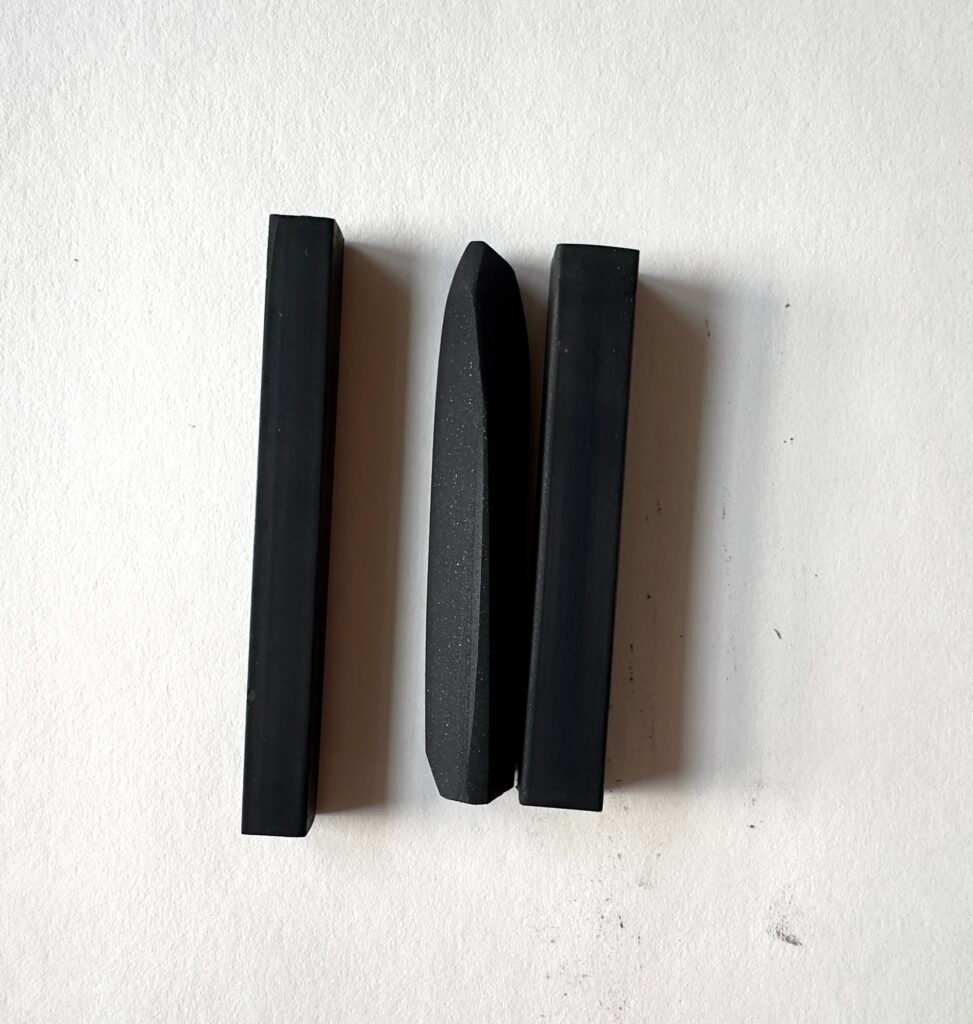
Compressed charcoal is made from ground charcoal powder mixed with a gum or wax binder and pressed into sticks.
Compressed charcoal typically consists of:
- Charcoal powder
- Gum or wax binder
Compared with Conté, compressed charcoal is significantly softer and more yielding on the drawing surface. It is also much denser and darker than vine or willow charcoal.
Because of its high charcoal concentration, it produces deep, velvety blacks and deposits pigment quickly into the tooth of the paper.
How Compressed Charcoal Behaves on the Surface
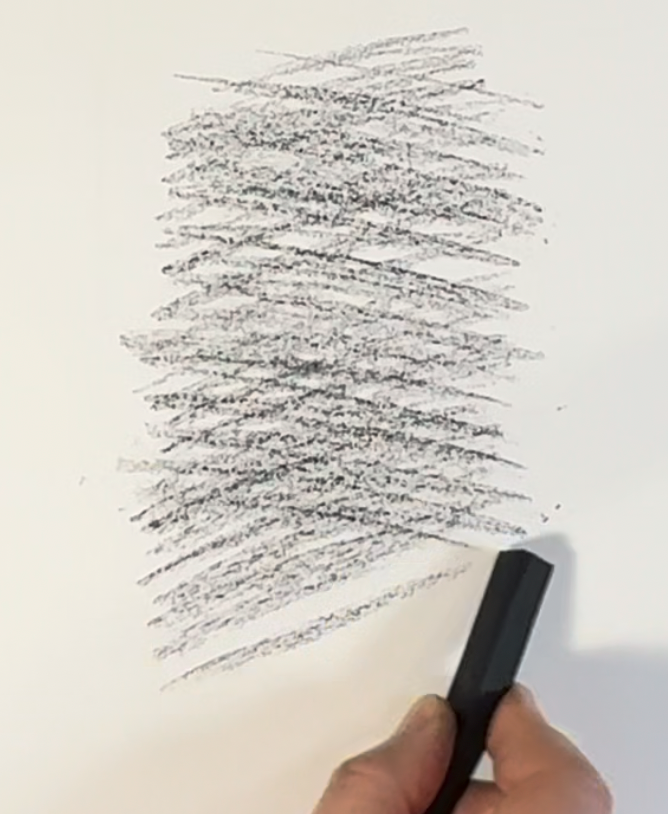
When applied to paper, compressed charcoal behaves very differently from harder drawing media.
It lays down pigment quickly and produces extremely rich dark values. However, because the charcoal sits more loosely on the surface, it smudges easily and can be difficult to fully erase once applied. Returning to pure paper white is often challenging after the charcoal has settled into the paper’s tooth.
Compressed charcoal can be used on the tip for line work, but it truly excels when used on its side to block in broad tonal areas and large shapes.
Techniques Where Compressed Charcoal Excels
These characteristics make compressed charcoal especially suitable for expressive and tonal drawing approaches.
Large mass block-ins
Using the side of the stick to quickly establish shadow shapes, backgrounds, and overall value structure.
High-contrast lighting
Creating strong, decisive shadows for dramatic compositions.
Deep tonal passages
Building dense, velvety dark areas that anchor the value structure of the drawing.
Expressive mark-making
Gesture strokes, atmospheric edges, softened contours, and bold textures.
Rather than focusing too much on the messiness of compressed charcoal—its tendency to smudge and its limited erasability—try to think instead about what this medium can do that others cannot. Its very characteristics can become advantages.
Subtractive Drawing–
Covering an area with charcoal, then lifting highlights with a kneaded eraser before refining darker passages again.
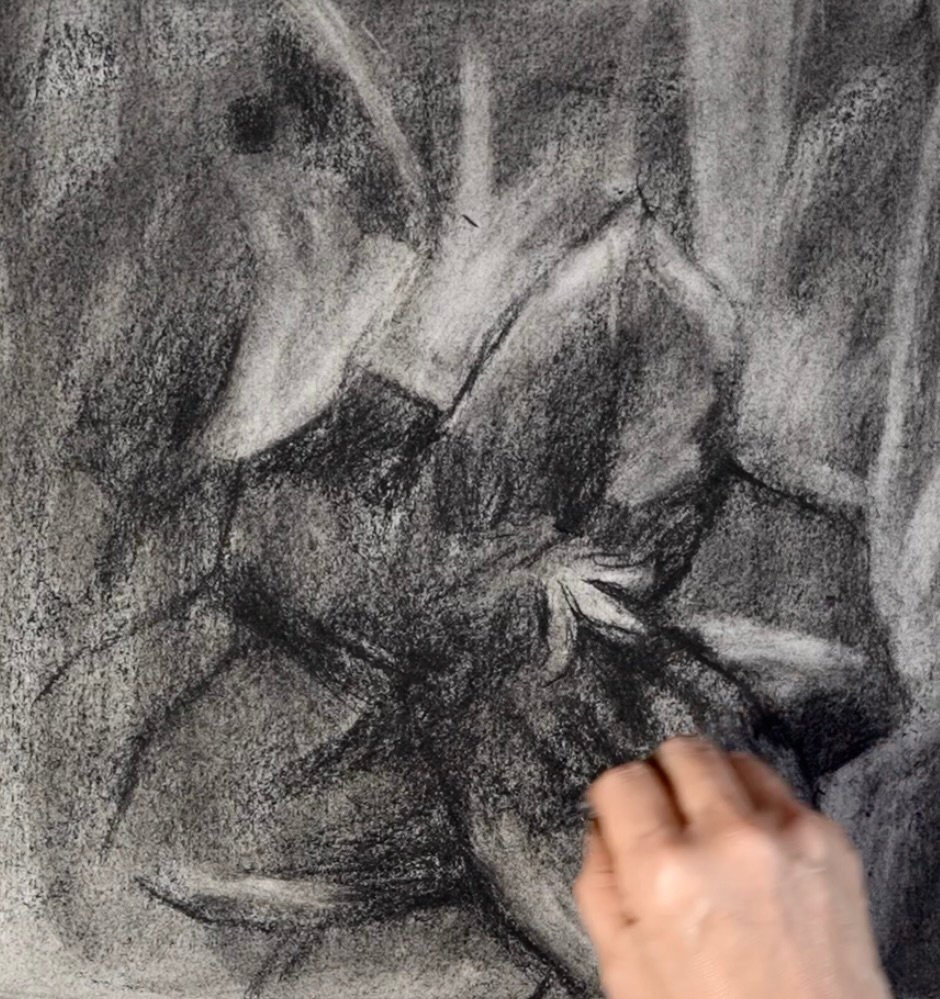
Using the side of the stick
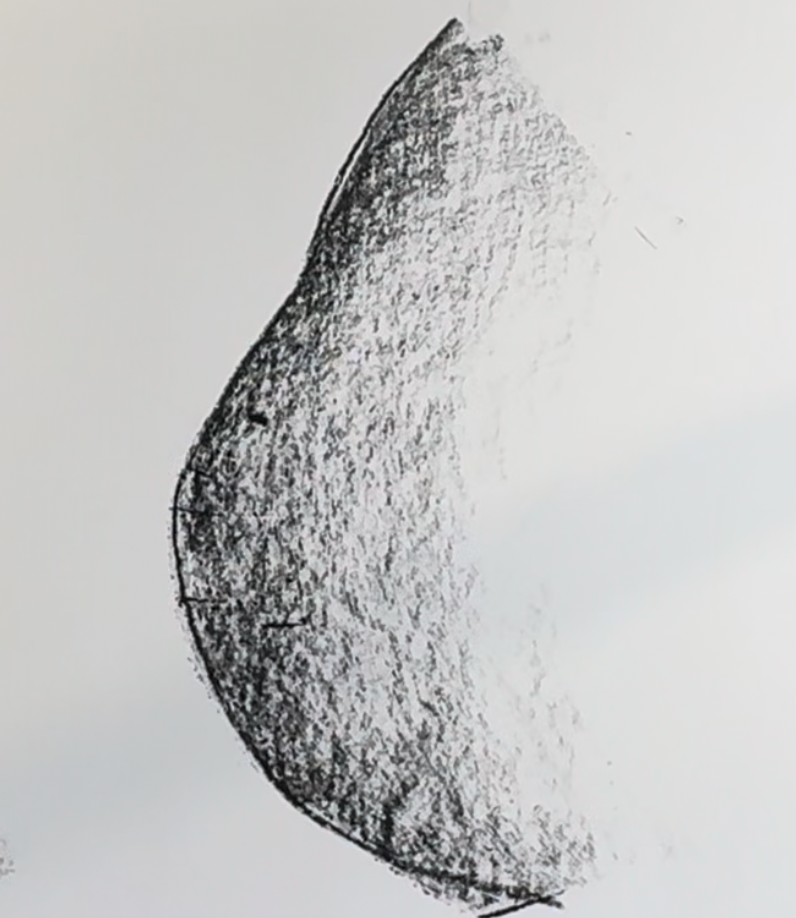
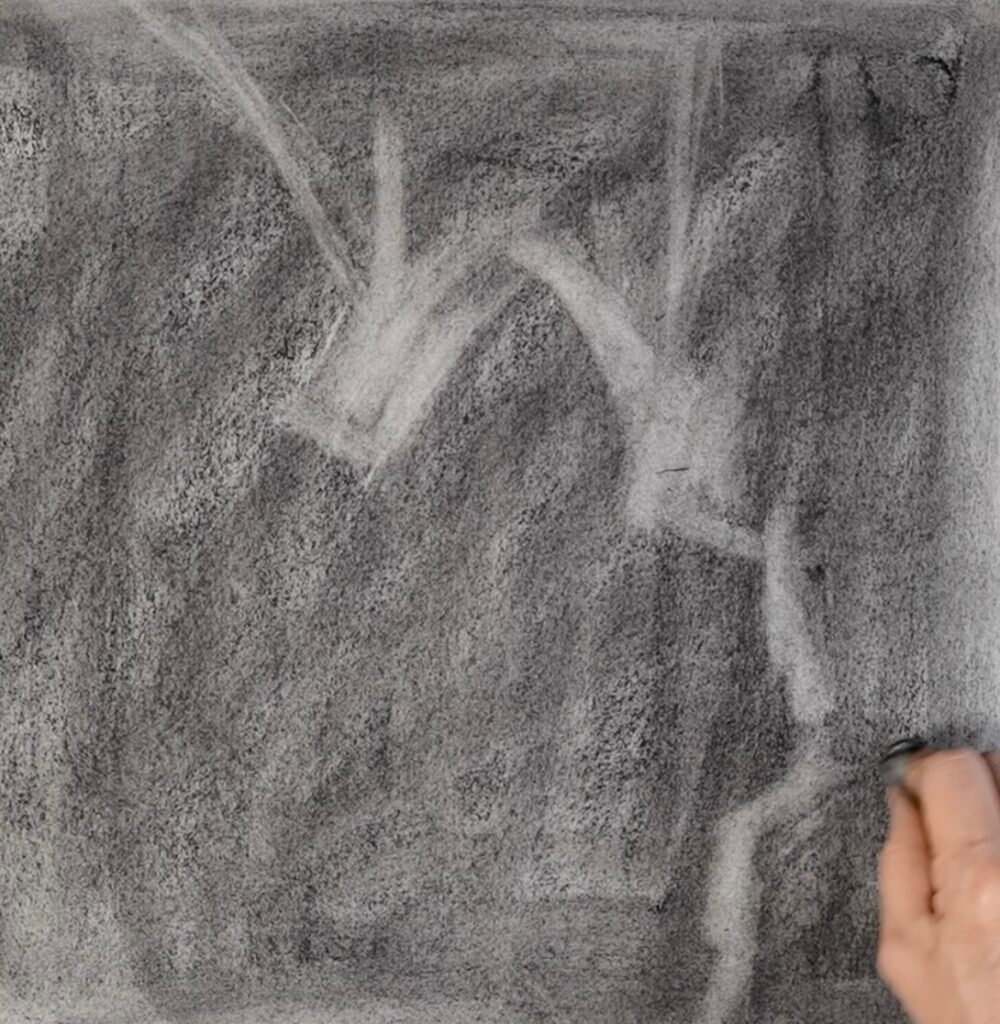
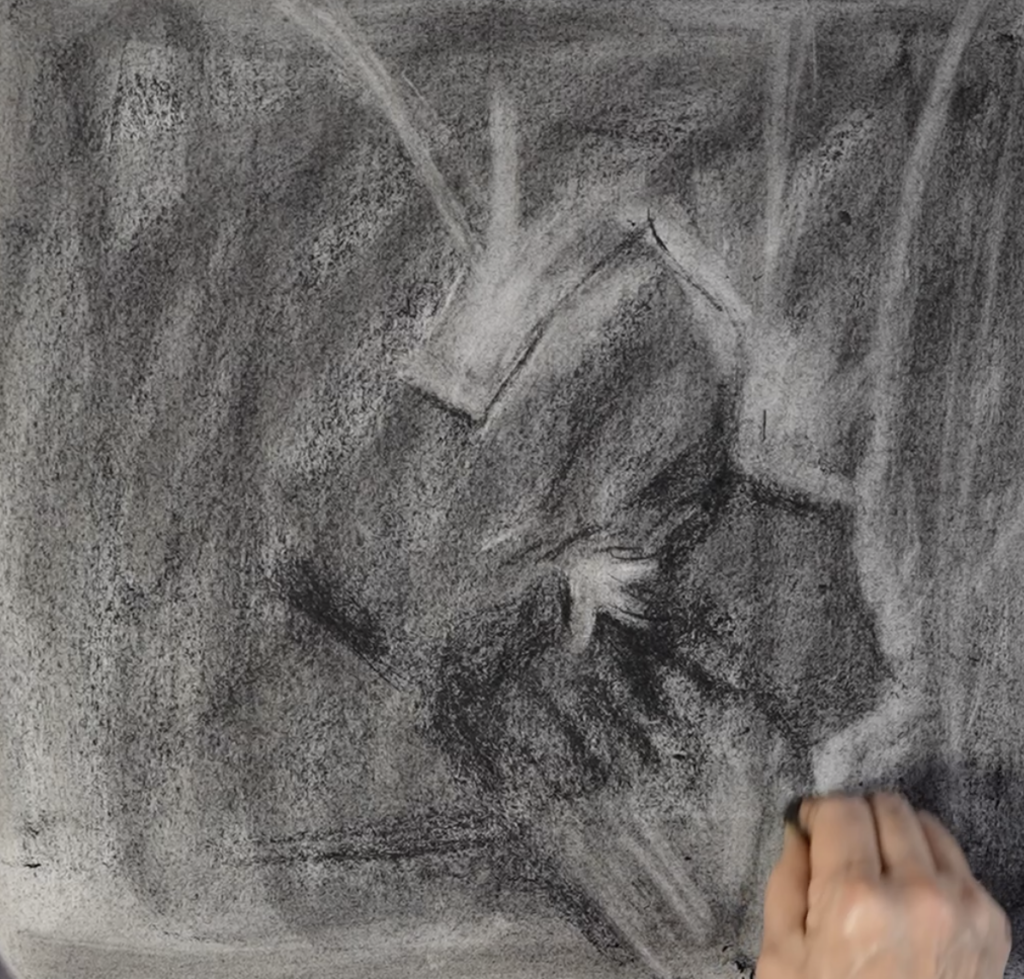
Compressed charcoal also shines when you use the side of the stick to block in broad tonal areas and large shadow shapes.
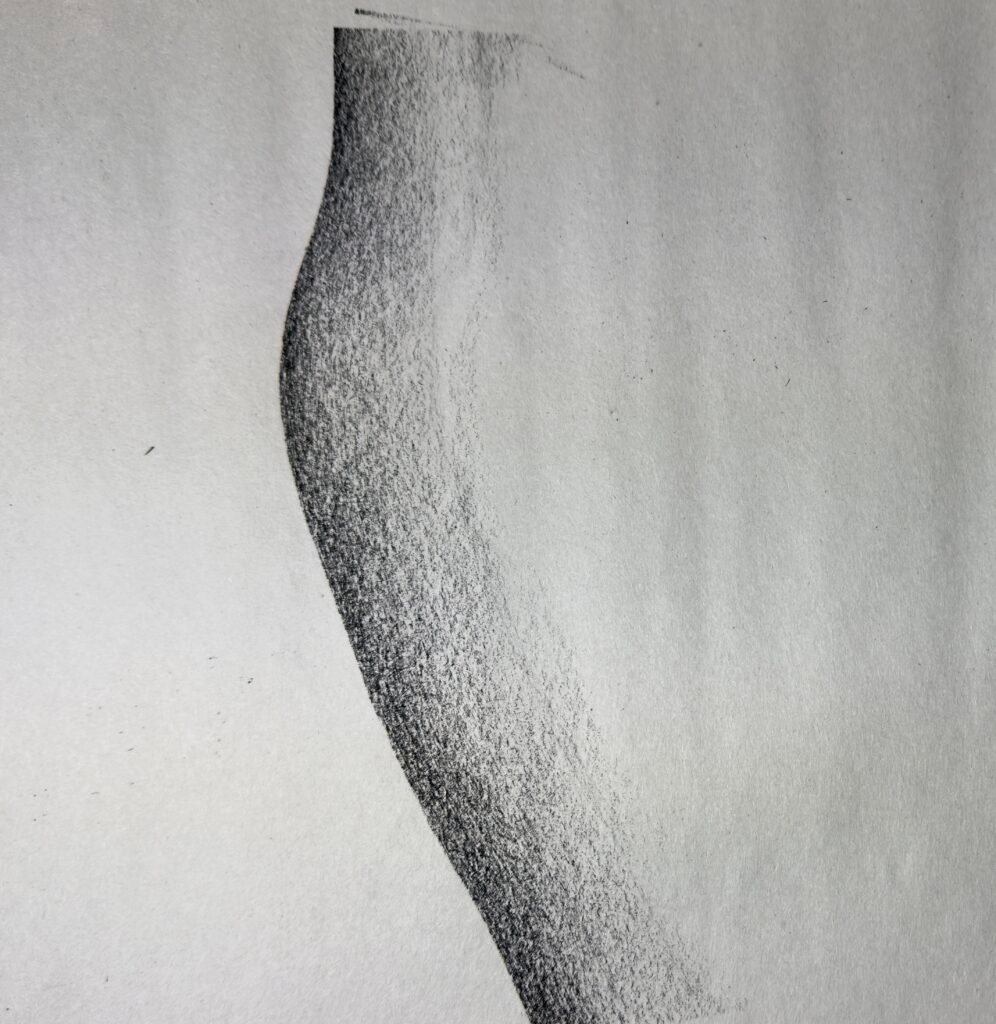
This stroke was made with a square compressed charcoal stick by pressing one corner of the stick against the paper.
Because the pressure is concentrated on one edge of the stick, that side deposits more pigment creating a darker value, while the opposite side leaves a lighter tone.
This demo starts with a rough sketch of an arm with a vine charcoal before defining it with a compressed charcoal.
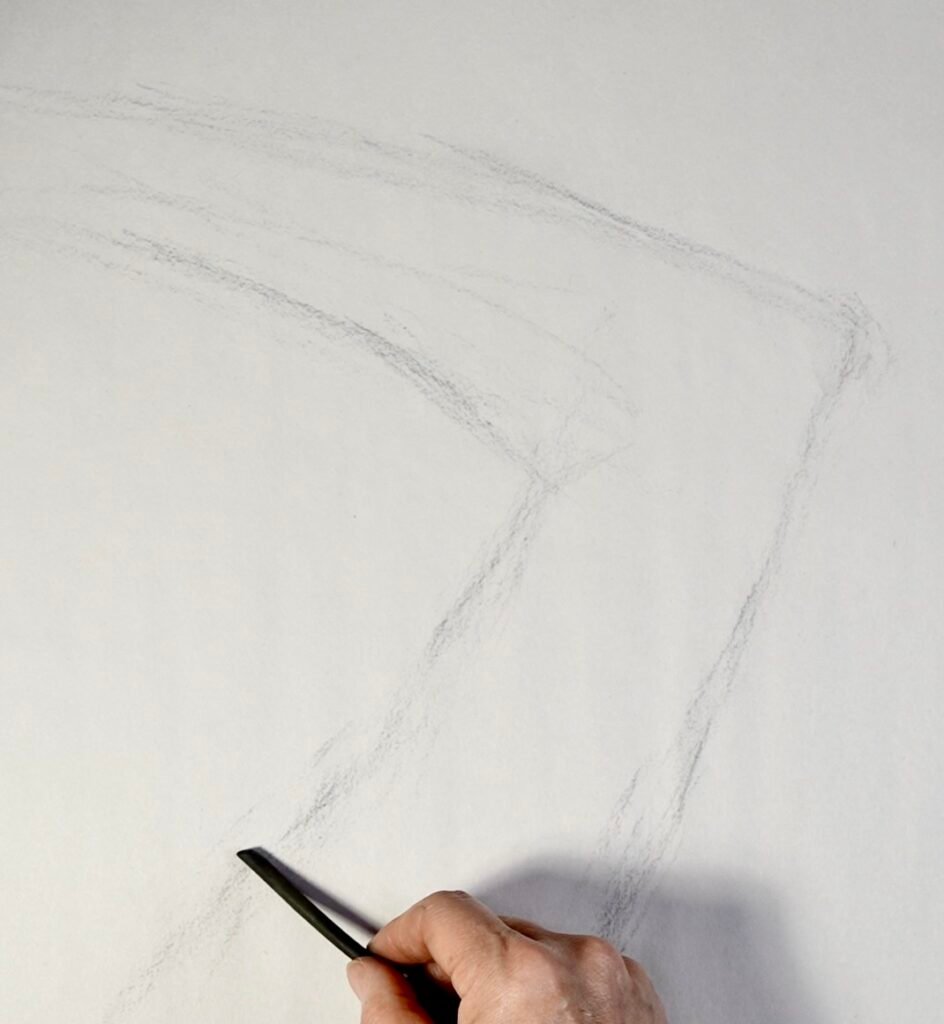
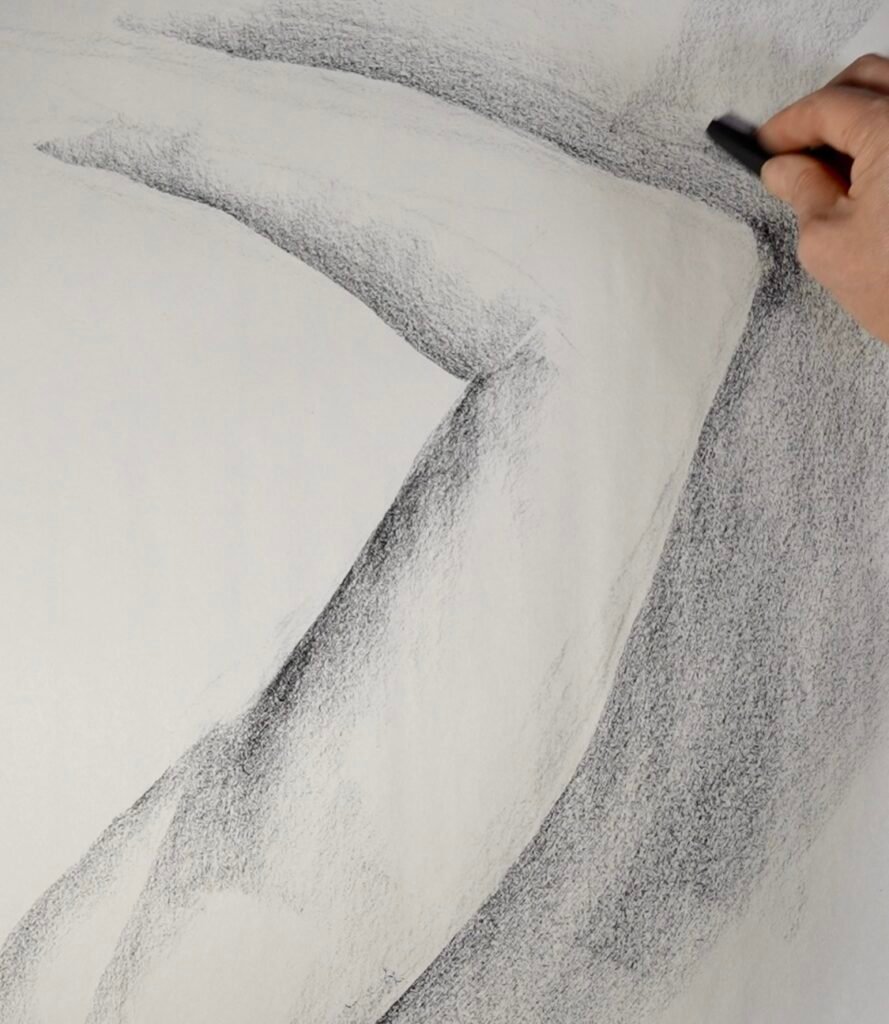
This naturally creates a value gradation within a single stroke. The darker edge suggests the shadow side of the form, while the lighter edge turns toward the light. In this way, a single stroke can already describe the volume of the form.
When the stroke follows the direction of the form—as you see along the arm here—it reinforces the structure and helps the form read more clearly as three-dimensional.
For the background, you can apply even, consistent strokes to build a flat value. This helps create a calm, unified background.
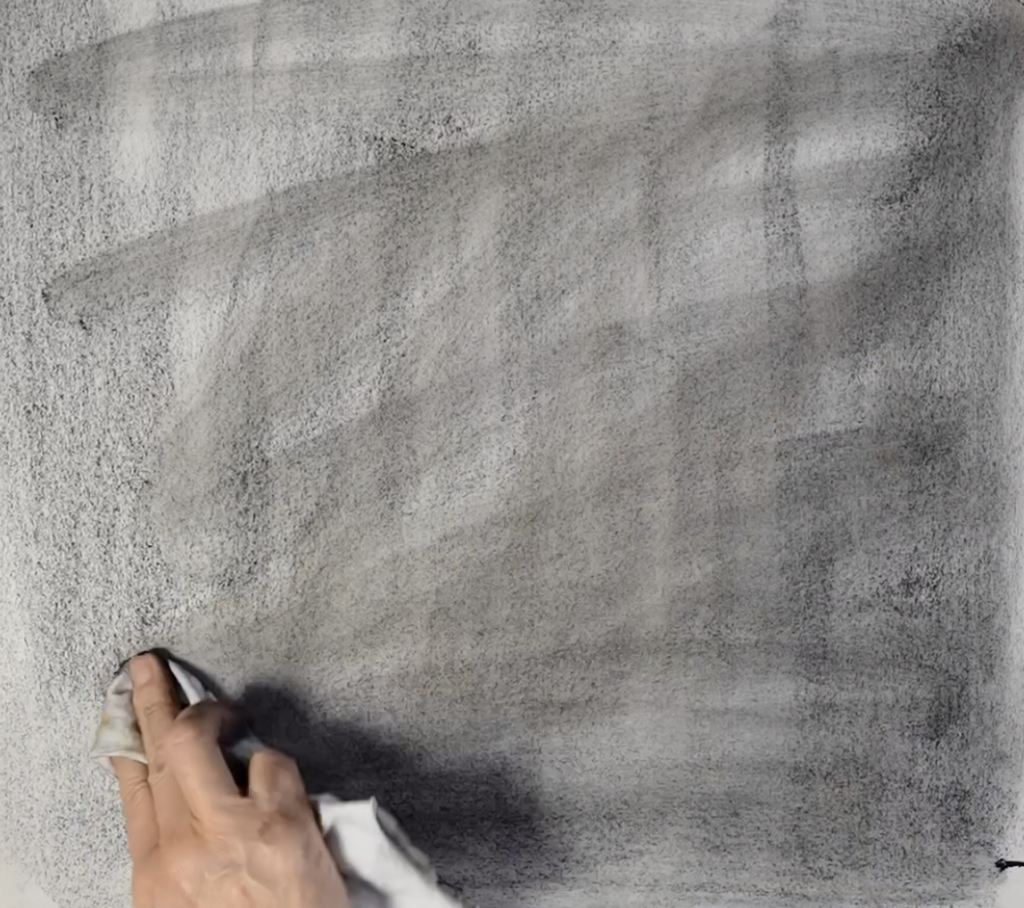
Compressed charcoal allows you to work on a larger scale much more quickly. Because it smudges so easily, you can use that quality intentionally—spreading and softening the pigment with a cloth to create broad, beautiful tonal areas in very little time. And because it does not erase cleanly, it naturally encourages a more direct, emotional, and spontaneous approach, rather than one based on small corrections and fine details.
Precision vs. Expression: A Direct Comparison
Smudging, blending & erasing
- Conté: Less inclined to smudge and somewhat more resistant to erasing due to its clay/wax content, but it blends nicely with a stump when you choose to blend.
- Compressed charcoal: Smudges very easily and can be blended with fingers, stumps, or cloth for quick shading and subtle gray transitions.
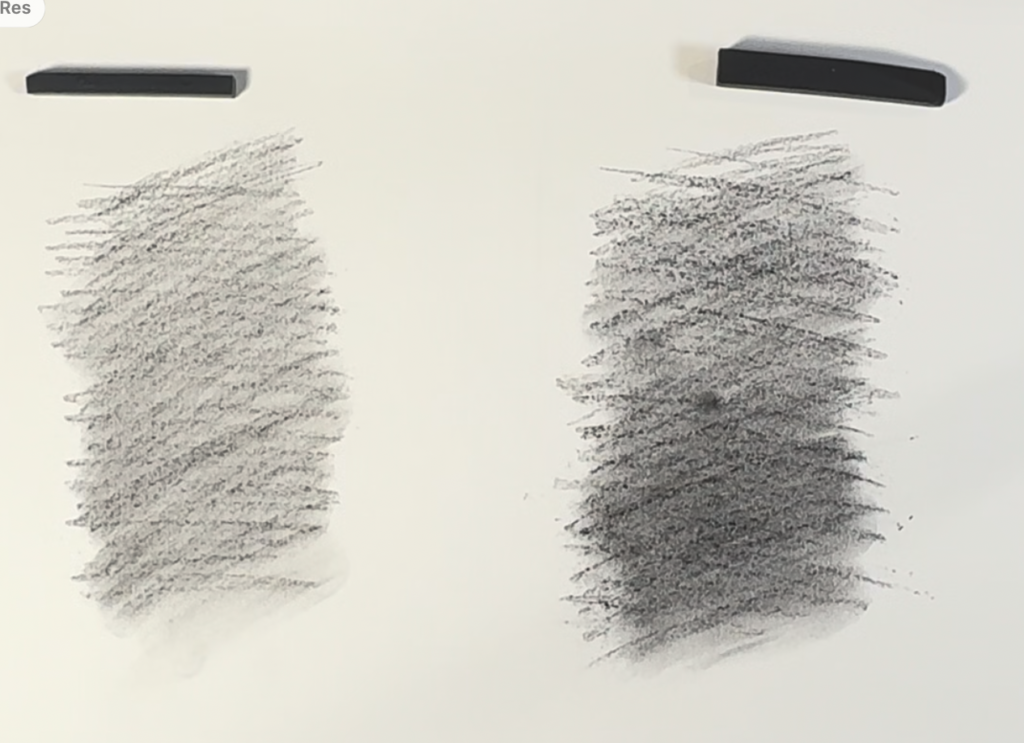
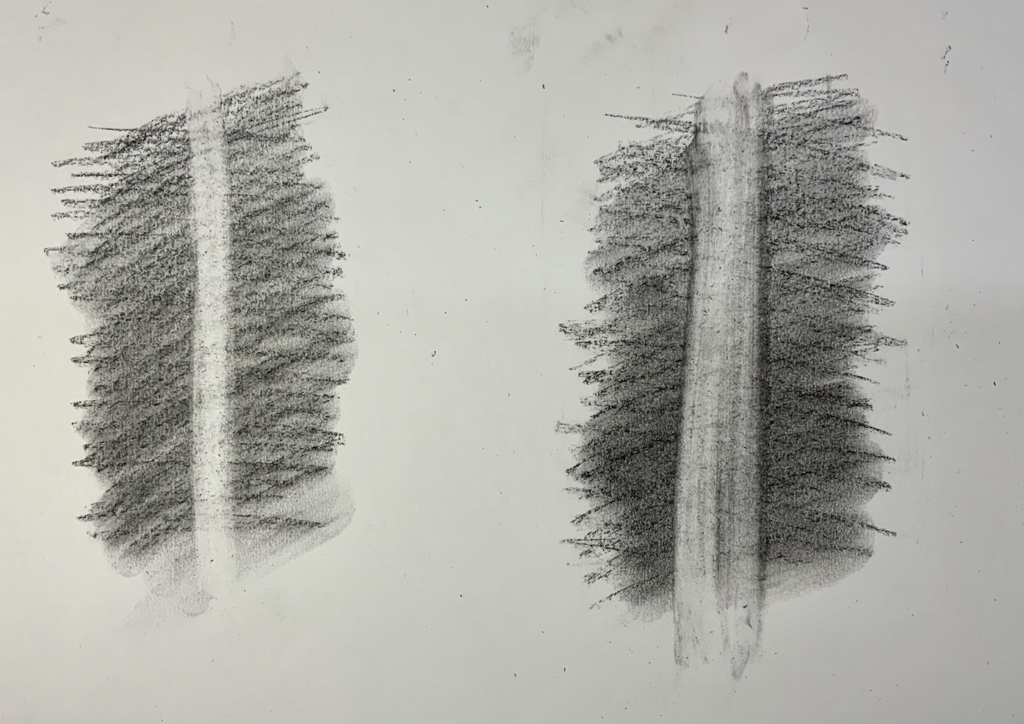
At‑a‑glance comparison
| Aspect | Conté (Precision) | Compressed Charcoal (Expression) |
| Hardness / feel | Firmer, controlled | Softer, dense, bold |
| Mark character | Clean edges, subtle gradations | Deep blacks, broad masses |
| Line quality | Fine, precise lines | Bold, gestural marks |
| Smudging | Less prone to accidental smudge | Smudges easily |
| Erasing | Lifts predictably | Partially liftable, rarely fully white |
| Value range | Strong mid‑tones | Extremely dark maximum values |
| Best mindset | Measuring, constructing | Responding, expressing |
| Typical uses | Figure construction, portraits, underdrawings | Dramatic portraits, expressive studies, high‑contrast still life |
Surface Compatibility
Conté works beautifully on:
- Toned paper
- Smooth to medium‑tooth surfaces
- Papers that favor clean, articulate line work
Compressed charcoal thrives on:
- Medium to heavy tooth paper that can hold dense pigment and heavy layering
- Large formats where broad massing and big gestures make sense
- Surfaces you are comfortable committing to rich blacks
Dust, Fixative, and Portability
Conté
- Cleaner and easier to handle in sketchbooks
- Produces less dust
- Still benefits from light fixative
Compressed Charcoal
- Dustier and more prone to fallout
- Often requires more frequent fixative
- Messier but visually powerful
Color vs. Monochrome
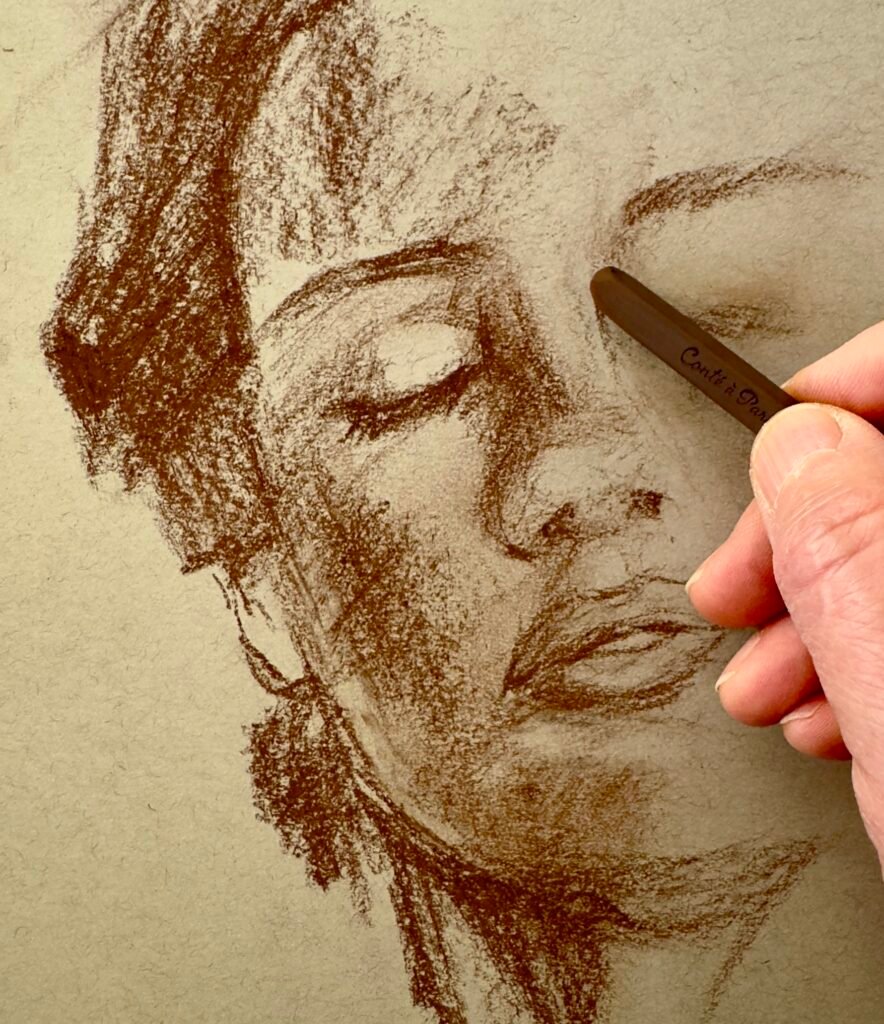
Conté
- Commonly available in classic drawing colors such as black, white, sepia, sanguine, and bistre (tan/brown), often made with natural pigments
- Perfect for limited‑palette studies, figure work, and classical drawing on toned paper
Compressed charcoal
- Primarily available in black (and occasionally variations like extra‑soft black or slightly tinted darks)
- Focuses on value and atmosphere rather than color temperature shifts
Can You Combine Conté and Compressed Charcoal in the Same Drawing?
Yes—you can combine Conté crayons and compressed charcoal in the same drawing.
However, because the two materials use different binders—gum-based binders in compressed charcoal and wax- or clay-based binders in Conté—the order in which they are applied can affect how well they work together.
Based on my tests and practical experience, here are three important points to remember.
- Apply charcoal first
When layering the two materials, it is generally best to apply compressed charcoal first.
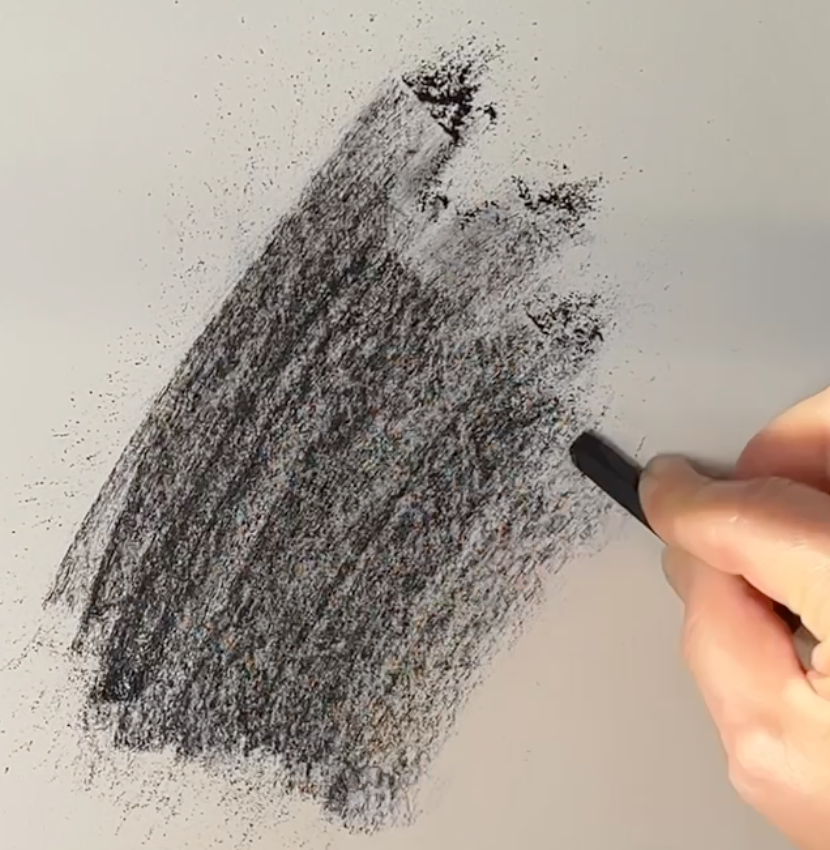
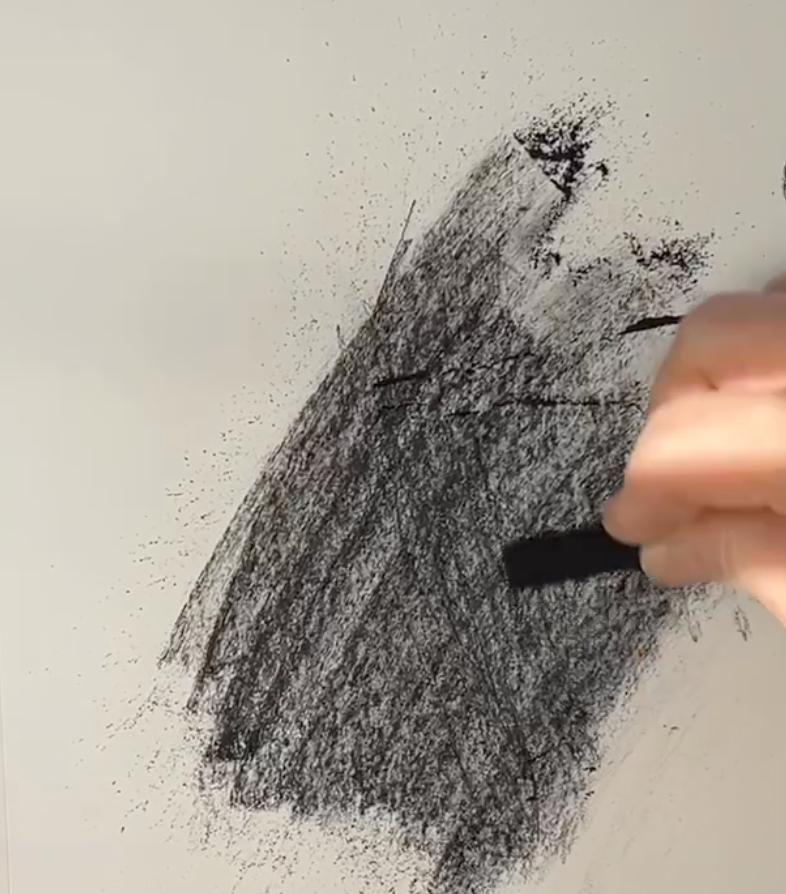
Conté contains a waxy binder that can create a slightly slick surface. If it is laid down first and fills the tooth of the paper, charcoal may resist the surface and fail to produce its characteristic deep blacks. As you can see in my test, charcoal placed over a Conté layer appeared noticeably weaker and less rich.
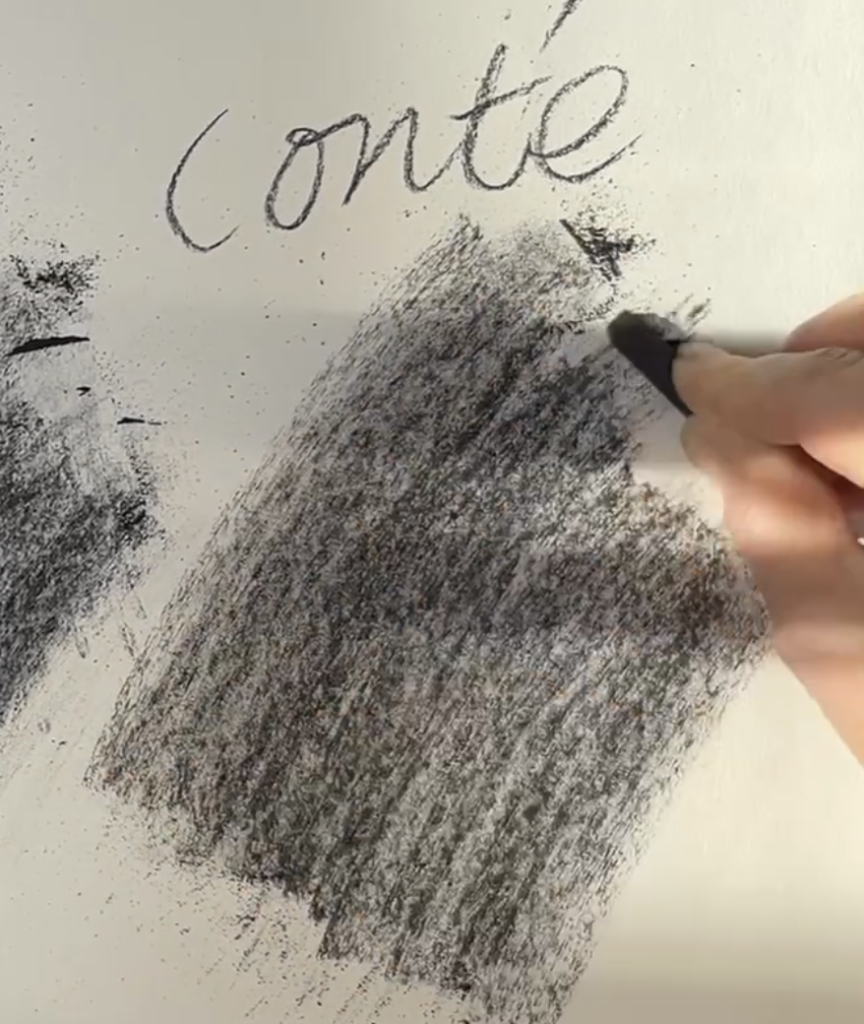
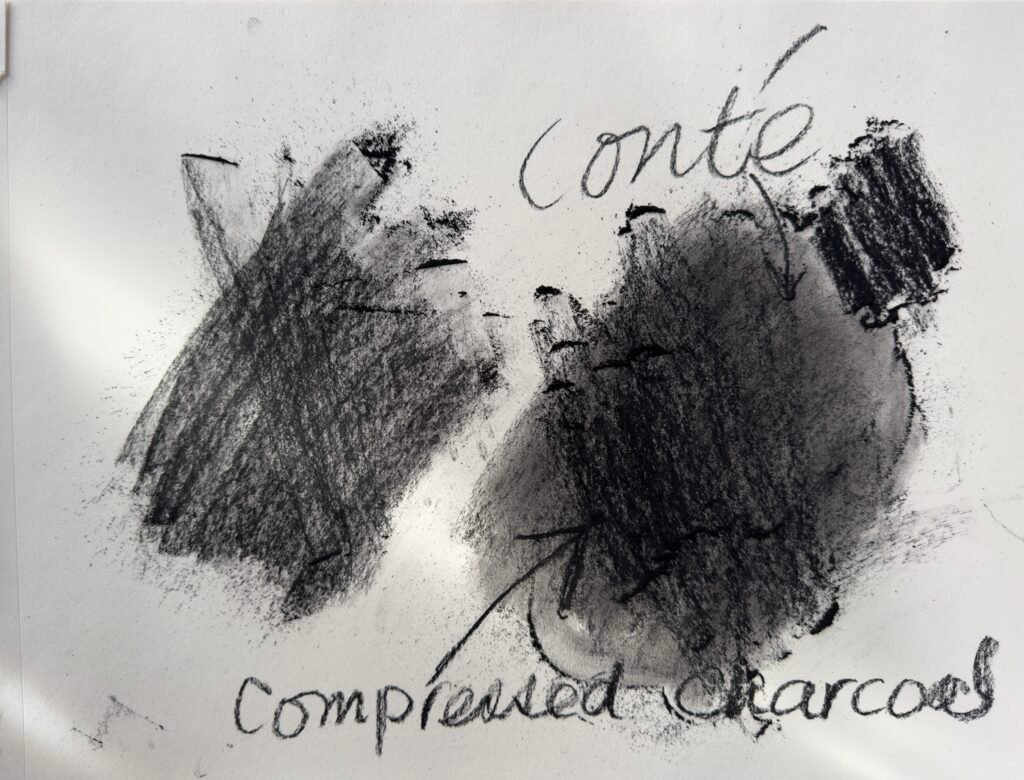
However, if the Conté layer is applied lightly and the tooth of the paper is not completely filled, the two materials can still work together without much difficulty.
2. A practical approach is to use compressed charcoal for broader areas and expressive tonal passages, while reserving Conté for controlled lines and refined details.
In my own drawings, I tend to use Conté for more delicate or controlled areas, and compressed charcoal for larger tonal passages and more expressive strokes.
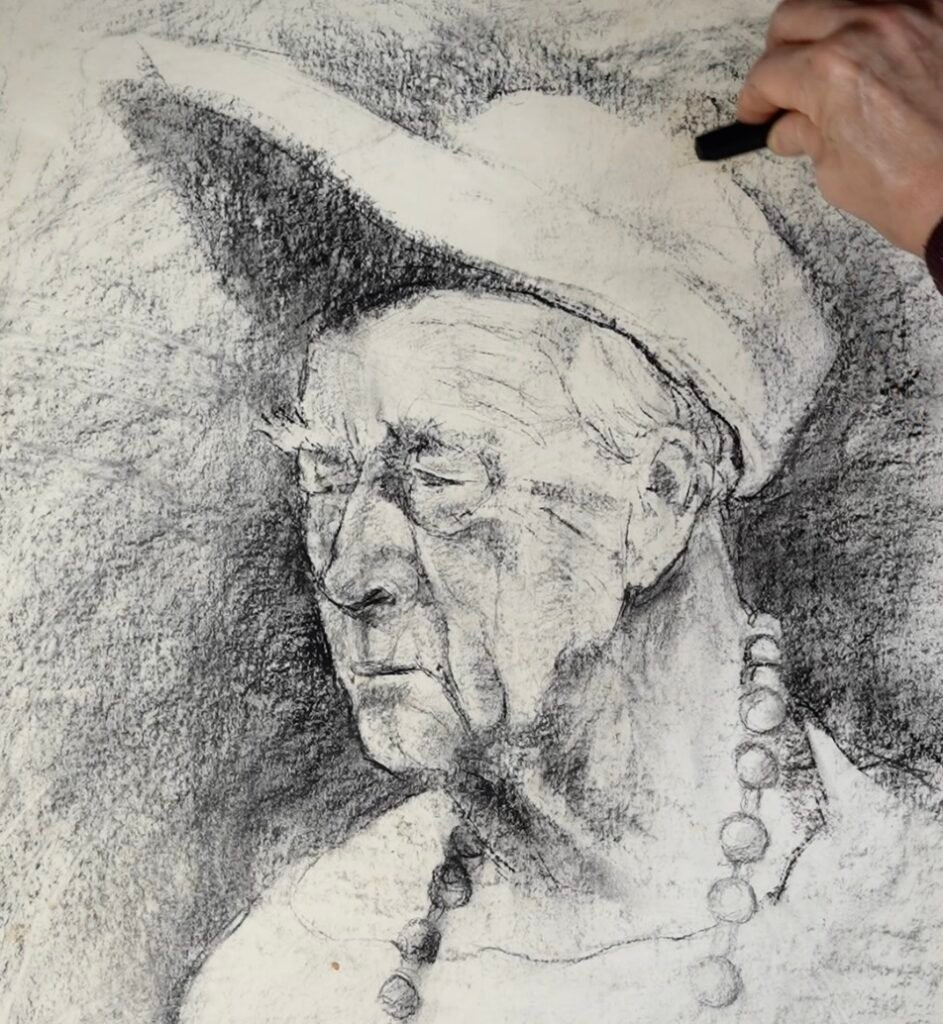
3. Choose the right surface and plan ahead. These materials also behave differently depending on the drawing surface.
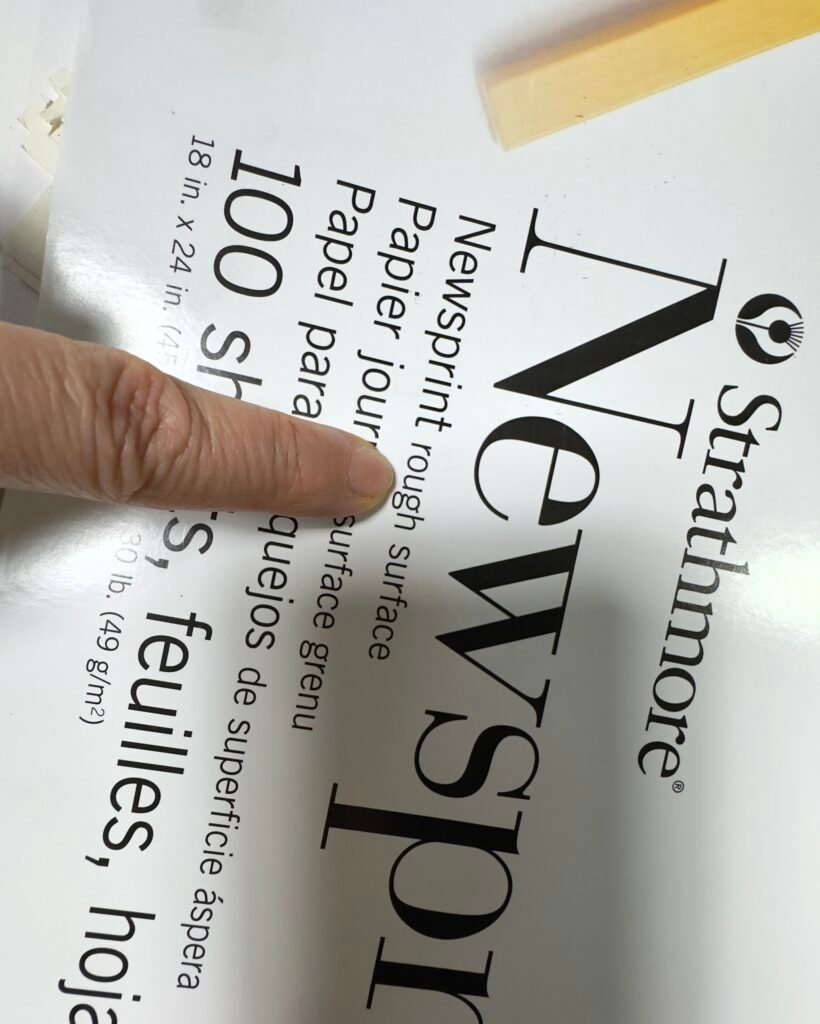
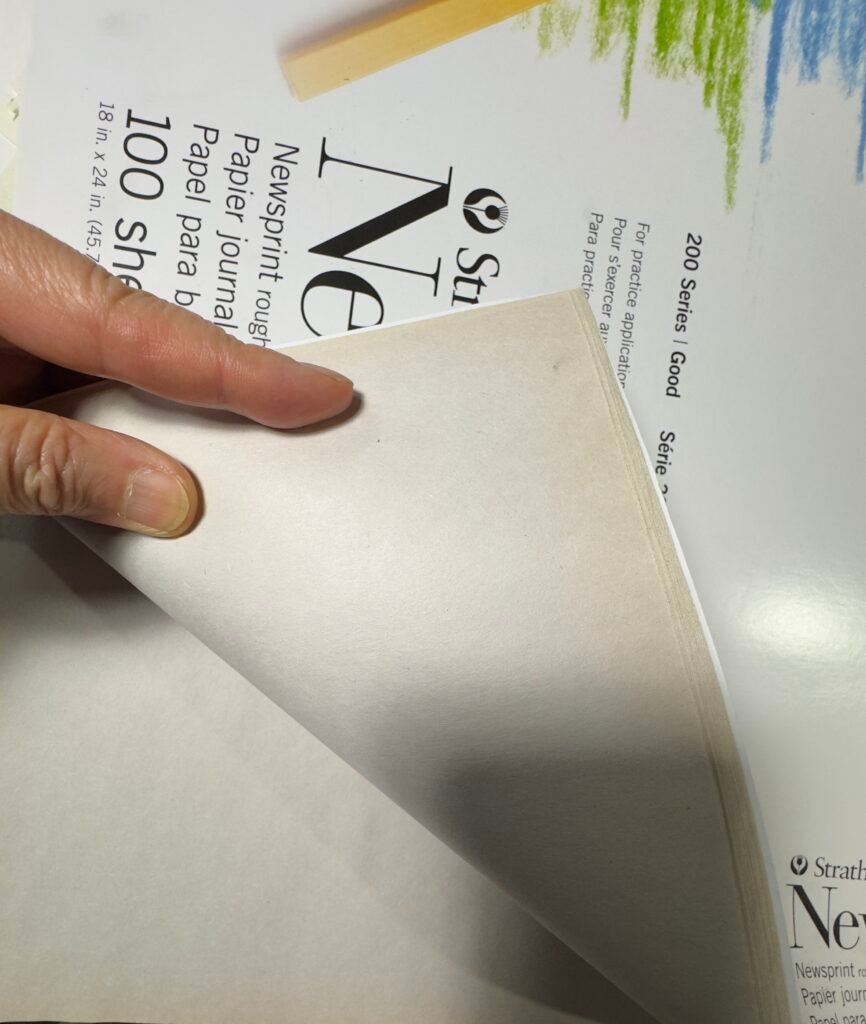
Compressed charcoal works best on papers with enough tooth to hold the pigment securely. Rough textured Newsprint is excellent for practice.
It is also important to remember that compressed charcoal cannot be completely erased once it settles into the paper. Because of this, it is best to avoid placing it in areas that may require major corrections later in the drawing.
Materials Used and Recommended
(Note: A harder compressed charcoal stick was shown briefly at the beginning, but it produced weaker, less rich marks and is not recommended for this type of drawing.)
– Conté à Paris Sketching Pastel Carrés, Set of 4
Available at Blick and Amazon
– Alphacolor Charcoal – Black, Pack of 3
Available at Blick
– Strathmore Newsprint
Available at Blick
– Strathmore 400 Series Recycled Toned Sketch Pad – 18″ x 24″, 24 Sheets, Cool Gray
Available at Blick and Amazon
– Prismacolor Kneaded Eraser
Available at Blick
Some links may be affiliate links. I only recommend materials I use or trust.
Final Reflection
The real question is:
What kind of drawing are you trying to create?
Are you constructing form—or expressing mood?
Conté slows you down and clarifies structure.
Compressed charcoal accelerates decision‑making and intensifies the atmosphere.
Both are powerful.
They simply train different artistic instincts.
Neither medium is inherently superior.
YouTube Video
Please click the image to watch the video.